

ALFA Field Notes
Critical Minerals, TrumpRx, and Data Centers in Space

Good morning. Here are three developments from the week that we think are worthy of greater attention.
Critical Minerals Cooperation
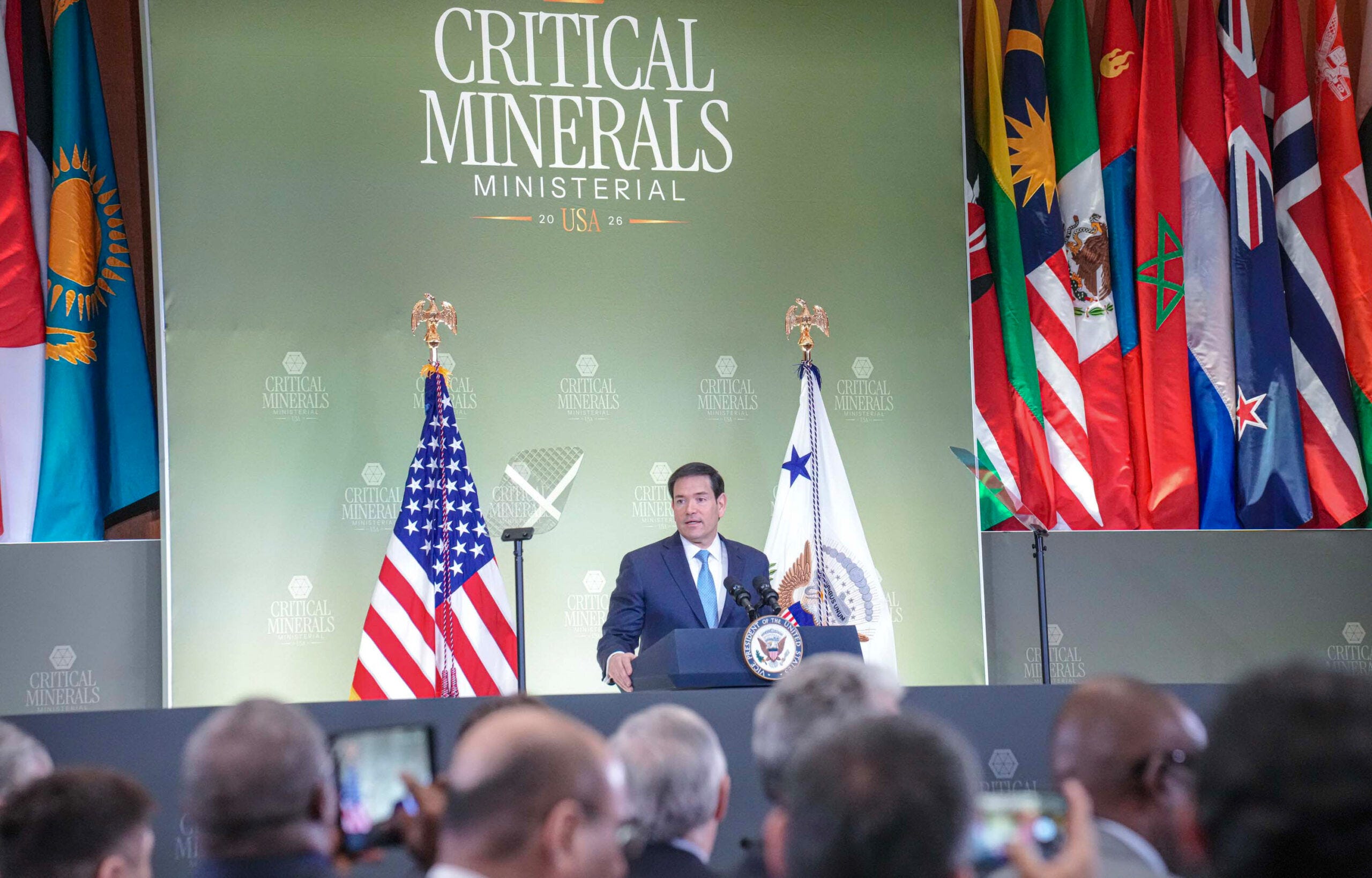
Secretary of State Marco Rubio convened the inaugural Critical Minerals Ministerial that welcomed fifty-four countries and forty-three foreign ministers. The new Forum on Resource Geostrategic Engagement (FORGE) coordinates price floors enforced through adjustable tariffs so that when China floods the market with below-cost materials to kill Western competitors, FORGE members respond with tariffs that restore price integrity. The mechanism is automatic and defensive. No bureaucratic delay, no case-by-case adjudication.
Two days before the ministerial, President Trump unveiled Project Vault—a strategic mineral reserve backed by $10 billion in EXIM financing and $2 billion in private capital. The model mirrors the Strategic Petroleum Reserve: gallium, cobalt, rare earths, the elements that go into everything from jet engines to AI chips.
China controls roughly 60 percent of rare earth mining and 90 percent of processing. The U.S. relies entirely on imports for twelve critical minerals and imports at least half its needs for twenty-nine more.
China’s lead is measured in decades of investment and thousands of processing facilities. But strategic competition isn’t about scoring on a static goalpost of parity, it’s about trajectory and dynamics. America is finally moving in the right direction on minerals. The question is whether we can accelerate from here.
TrumpRx
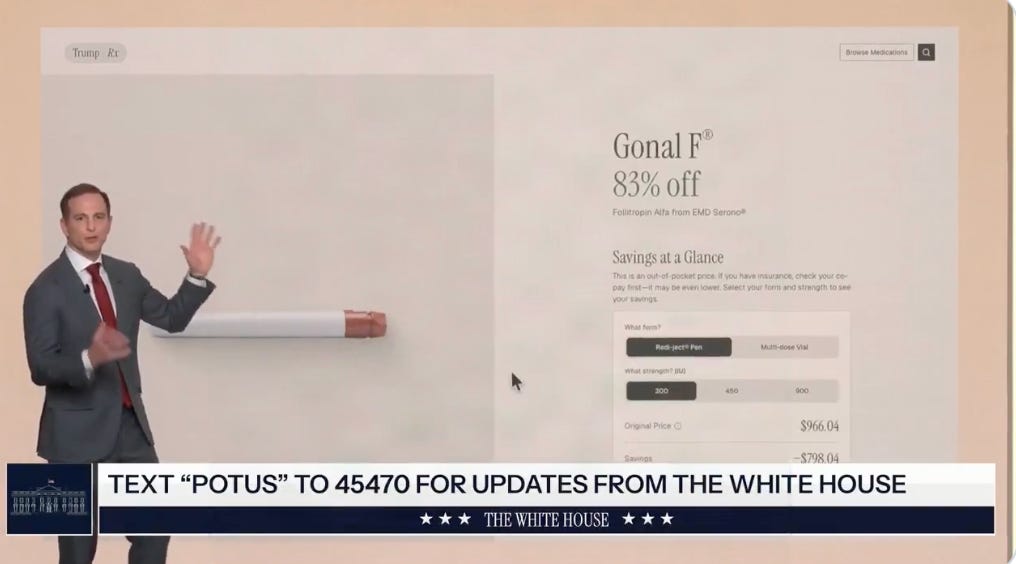
President Trump, CMS Director Mehmet Oz, and head of the National Design Studio Joe Gebbia unveiled TrumpRX, a new website that allows Americans to claim coupons that will reduce the price they pay for prescription drugs at the counter. The event was reminiscent of a new software release from a top technology company, with live demos and explanations. Introducing new government features isn’t usually an engaging exercise. Kudos to the team taking a dynamic approach.
One of the challenges with an administration that has moved so swiftly and independently (this product is a result of direct negotiations with drug companies) is that catalyzing events can get overlooked or quickly forgotten. Last night’s rollout gives this administration’s important policy achievement a fresh opportunity to not only talk about it, but demonstrate it. Free idea to members of Congress: set up an event with your local pharmacy to show this in action.

Data Centers In Space
SpaceX’s acquisition of xAI was about one big thing: leveraging SpaceX’s access to orbit to power the AI company. Specifically, putting data centers in space. Following the announcement, Musk talked about why he believes this needs to happen and how quickly it could be deployed. His belief is that physical constraints on Earth will cap (or have already capped) our ability to create more energy and connect that energy to data centers. Those constraints? Permitting, turbine backlogs into the 2030s, and extremely long interconnection queues. “It’s harder to scale on ground than it is to scale in space,” he said.
Musk’s plan is to rapidly increase the number of Starship launches carrying data centers into orbit and capturing limitless solar energy. He predicts that space will be the cheapest place to put AI in 36 months or less.
There is obviously a competitive and strategic play here by Musk and xAI. But putting that aside, this bet is quite an indictment on our ability to permit and build in America. While Congress continues to poke at reforms, technologists are making other plans that are out of this world.