

ALFA Joins The Stack
Where Tech Meets Policy

Good morning. ALFA has joined Substack (where you will be receiving this newsletter from now on).
Over the past several months we have heard that our original reporting and analysis has been an impactful resource to you. As a result, we are investing more time and energy into our media enterprise. ALFA News is the byproduct of that and we think it deserves a dedicated space.
Most of our past content can be found on our Substack page and all of our previous content still lives on buildalfa.org.
The ALFA Institute isn’t going anywhere. It is alive and well. It will continue to conduct research, release reports, host events, and share its policy and regulatory recommendations. In fact, we’ll have a significant economic report out soon. Stay tuned.
In short, consider us your source of record for news and analysis at the intersection of technology and policy. If you have news to share, please drop us a line. Same email: sparks@buildalfa.org.
And as always, subscribe if you haven’t already.
Reactions to Wednesday’s Space Hearing
"Unless something changes, it is highly unlikely the United States will beat China’s projected timeline to the Moon’s surface.”
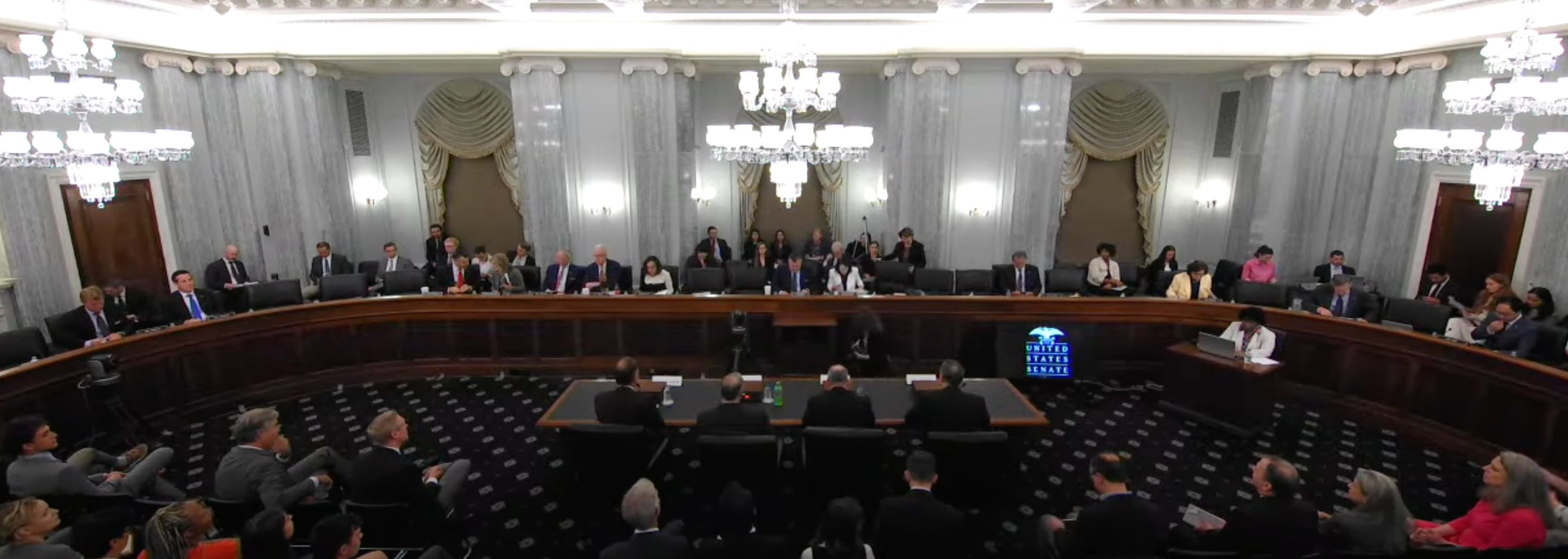
That’s what former NASA Administrator and current head of Government Operations for United Launch Alliance (ULA), Jim Bridenstine said at Wednesday’s Senate Commerce hearing.
According to Mr. Bridenstine—and the overall consensus at the hearing—one of the key things holding us back is the lack of a lunar lander.
Those landers are currently being built by SpaceX and Blue Origin (competitors to ULA)—who weren’t at the hearing to share their perspective (the Commercial Space Federation was originally invited and listed on the witness list but was later moved to a future TBD hearing).
At the hearing, witnesses and Senators expressed strong support for the current infrastructure that includes the government-backed Space Launch System (SLS) rocket, Orion capsule, and the Gateway station which would orbit the moon.
The One Big Beautiful Bill included nearly $7 billion for these programs.
However, this direction is different from what the White House proposed earlier this year.
The Trump administration’s FY26 budget request looked to phase out the SLS and Orion capsule, saying "SLS alone costs $4 billion per launch and is 140 percent over budget. The Budget funds a program to replace SLS and Orion flights to the Moon with more cost-effective commercial systems that would support more ambitious subsequent lunar missions."
Such diverging views only make it more difficult to achieve our goals.
What everyone can agree on though is the importance of establishing a regular lunar presence—from national security purposes to economic opportunities.
But after watching the hearing Wednesday, any interested citizen would be left wanting by the fact that the leading commercial space innovators—who are clearly essential to the mission—were left off the witness list.
The bottom line is that we won’t achieve any of our space ambitions without the commercial partners that have altered the course of American space exploration, and any conversation around our fate in the stars has to include their perspective.
Innovation As the Ultimate Trust Buster
By now, everyone has heard of the remedy decision this week to the the Department of Justice’s earlier win against Google in the case of its monopoly.
The more important news though was the Judge’s finding that the emergence of AI and LLM’s offer a more competitive landscape to search.
“Given the ongoing GenAI arms race, Google will have to continue to invest billions and innovate in this highly competitive space just to keep up,” Judge Mehta wrote.

And we agree. We often look to our ChatGPT app for answers before Google. And while Gemini has shown to be a worthy competitor in the AI race, there are plenty of heavily used and highly valuable AI companies that consumers are turning to.
This is the way.
Innovation—not injunctions—is the ultimate trust-buster. Courts can police bad actors, but only new products change tomorrow’s defaults. Keep the lanes open, lower the cost of entry, and let better tools outcompete old habits.
Discussing the White House Task Force on AI Education
Yesterday the First Lady held a meeting with the White House Take Force on AI Education, which included several members of the cabinet and private sector leaders.
We jumped back in with our friends Shaun Modi and Matt Lira to discuss the significance of a White House event like this and how we could see AI improve learning modules for students of all abilities.
Watch it here 👇