

American Startups Are Taking the Open Road With AI
Plus, Three Stories to Know From The Week and One to Pull You Back in Time


The Trump administration’s decision to allow Nvidia to sell advanced (but not the most advanced) AI chips to customers in China has largely fallen into two reaction categories:
Bad Idea: We should not be providing our great competitor with our greatest technological advantage: advanced chips.
Good Idea: Let American companies cook. The best defense is a great offense.
But as the news cycle washes through, we want to share another thought that should stay with you when thinking about AI, the U.S., and China.
NBC News had a piece recently on the growing share of American AI startups that are building on free Chinese models such as DeepSeek, Alibaba’s Qwen, and Moonshot’s Kimi. These aren’t knockoffs anymore. They’re at the frontier, and even companies like Airbnb “heavily” rely on Qwen, per its founder, Brian Chesky.
Why? They’re open source, meaning the models are customizable and cheaper to use. One founder told NBC that closed-model API (i.e. Anthropic) costs can run $1,000 per user. Open models running on local hardware cost a fraction of that.
The instinct in some quarters will be to sound the alarm, demand new restrictions, and treat every Chinese model download as a security breach. That’s short-sighted.
We wrote in October that open AI models are the key to broader AI adoption. The problem isn’t that China is open sourcing capable models. The problem is that America isn’t.
Meta’s open-source model Llama has stalled and Zuckerberg says he won’t open source the “superintelligence” his company is working on. Meanwhile, OpenAI just released its first open model in five years, an admission that ceding the entire open ecosystem to Beijing was a strategic error.
The reality is that many American companies are going to use the tools that are best for their bottom line and deliver a great service or product. Open models fit this bill. And American AI companies should be building more of them.
The real fight: chips and platforms
Models are important, but they are downstream of two things: the chips they’re trained on, and the platforms that serve inference at scale.
This is where American leverage actually exists.
As noted at the top, the Administration’s recent decision to open H200 sales to China has drawn criticism in hawkish circles. But there’s a logic worth taking seriously: every H200 that ships to a Chinese hyperscaler is a dollar not spent on Huawei’s domestic alternative: Huawei’s Ascend chips. Depriving them of marginal demand (keeping Chinese buyers on the American stack for as long as possible) may be worth more than an embargo that accelerates Chinese chip advancement.
This is the lesson of the last decade of export controls, which believed that delaying Chinese chip capabilities would create an insurmountable lead. But timelines are hard to predict, and adversaries adapt. China poured resources into domestic production. Huawei kept building. And SMIC (China’s chip maker) made progress. The original bet hasn’t paid off the way the architects hoped.
The better north star is American stack dominance, from hardware up. That means American chip designers stay ahead. That means U.S. cloud platforms remain the default for global inference. That means American open-source models are good enough that builders everywhere choose them over Chinese alternatives, not because they’re required to, but because they’re better.
This is how America wins.
Stories to Know From the Week
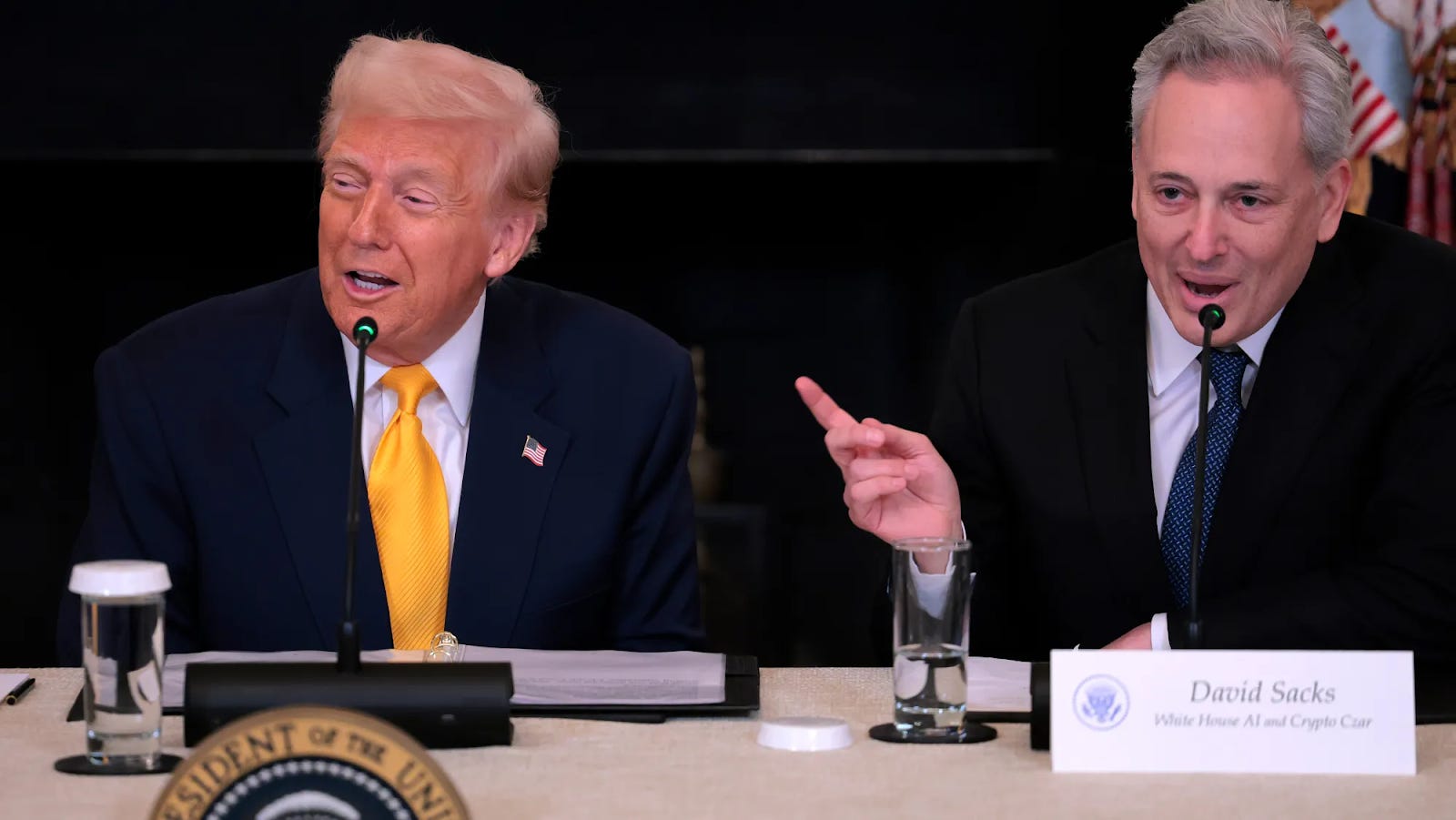
Trump Issues AI Executive Order
As previewed, President Trump has signed an executive order limiting states’ ability to issue regulations on AI. It creates a litigation task force to challenge state laws, orders a review of existing state laws to identify what may be out of compliance, and directs the Administration to develop legislative solutions for a long-term and durable federal AI framework. If states are identified to have onerous AI laws and do not comply with the EO, they could lose certain federal funding streams — though this last point is likely to be challenged in court.
This EO is in response to Congress’ inability to pass a federal standard for AI, which as we wrote earlier this week, needs to be a focused priority.

Disney + OpenAI
Disney and OpenAI struck a three-year licensing deal which allows the AI company’s video creation tool, Sora, to generate videos with Disney characters (200 of them are available). This is significant. The same day this partnership was announced, Disney sent a cease and desist letter to Google “alleging the tech giant has been infringing on its works to train and develop generative AI models.”
Disney has the most valuable and iconic IP in show business. And so it’s obvious they want to protect it as much as possible. In the messy world of IP and AI this deal makes sense. It allows Disney to meet fans where they are while establishing a partnership with OpenAI that will protect the integrity of their characters. And there is perhaps no IP more sensitive to maintaining its integrity than Disney’s.
Overall, we are a bit skeptical of AI generated video–at least in its current state. But with technology moving this fast, it’s not about where we are today. It’s about where it will be. And so Disney is smart to skate in that direction.

Read ALFA. See the Future (legislatively speaking).
The House passed a bill we highlighted in June as it was working its way through the Natural Resources Committee which “extends a Bureau of Reclamation program aimed at improving water supply predictions in the Western United States by using advanced technologies to measure and forecast snowpack and snowmelt.”
As we said at the time, “Congress is treating satellite-based resource intelligence as operational infrastructure, not research or pilot programs. This is about the Colorado River basin, but the technology platform scales to any snow-fed watershed.”
It’s easy to miss these types of bills: bipartisan and non-controversial. But that doesn't mean they aren’t of consequence. Legacy media, however, ignores them. That’s a disservice to the people that developed them and those that will use and rely on them.
ALFA intends to fix that. If you are working on something of similar consequence, let us know.

America’s Christmas Tree Lots Still Stand
Here’s a dispatch from a local Christmas tree stand in 2025.
“Society today is increasingly searching out ways to remove friction, especially around the holidays. Shopping via Amazon, artificial trees, and commercial drive-through light shows all chip away at the experiences that are supposed to make the Christmas season feel alive. Amidst these forces, the community-led Christmas tree lot hangs on … barely”
Read the full piece here.