

An Autopsy On The State AI Moratorium

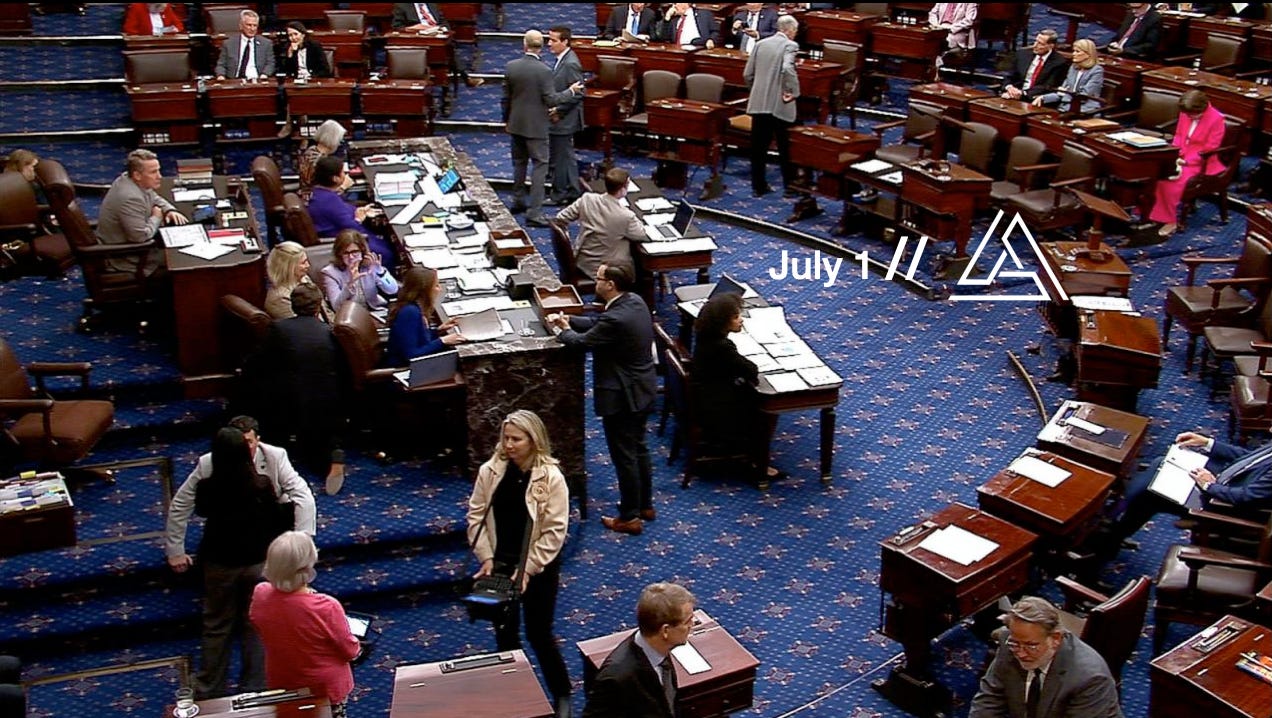
This morning, the Senate voted to strip a key AI provision from the One Big, Beautiful Bill: a moratorium on state-level AI regulations. It’s a quiet but consequential loss—and a glimpse into the political learning curve we’re still climbing when it comes to governing emerging tech.
After weeks of wrangling with skeptical Senators and the parliamentarian over reconciliation rules, it became clear that this idea needed to—as we used to say on the Hill—live to fight another day. That is why the vote to remove the provision was 99-1.
Still, it stings. The House advanced the provision largely intact. But confusion over its compatibility with budget rules—and a broader lack of fluency around AI policy—let the air out.
Call it what it is: a setback for American AI leadership and a missed opportunity.
Technology doesn’t pause for procedural niceties. Yet Congress continues to treat AI like something that can be safely bracketed into old models and frameworks. That instinct—to sideline, defer, delay—doesn’t just waste time. It opens the door for a fragmented, 50-state patchwork that undermines any semblance of a national strategy.
Even symbolic legislative defeats matter. They risk casting a long shadow and chilling future action. But that can’t be allowed to happen here.
This proposal has come further than most people expected. In just six weeks, it went from inception at the Energy & Commerce markup to passing a House majority floor vote to nearly surviving the Senate process—despite reconciliation constraints and only a small handful of GOP Senators publicly signaling opposition.
What it does show is there is plenty of work to do to land the pro-AI argument.
As we’ve written before, the tech industry—and its orbit of investors, builders, and policy thinkers—is ready to go full bore on AI. They see it as the next growth engine, the next global lever, the thing America has to lead on.
But for much of the public, especially creatives, educators, and workers in legacy fields, AI feels like a threat—not a tool.
Changing that narrative is the work now. Not with talking points. With stories.
That’s what ALFA intends to do.