

Cable Games: What’s Slowing Down the Internet’s Most Important Pathways

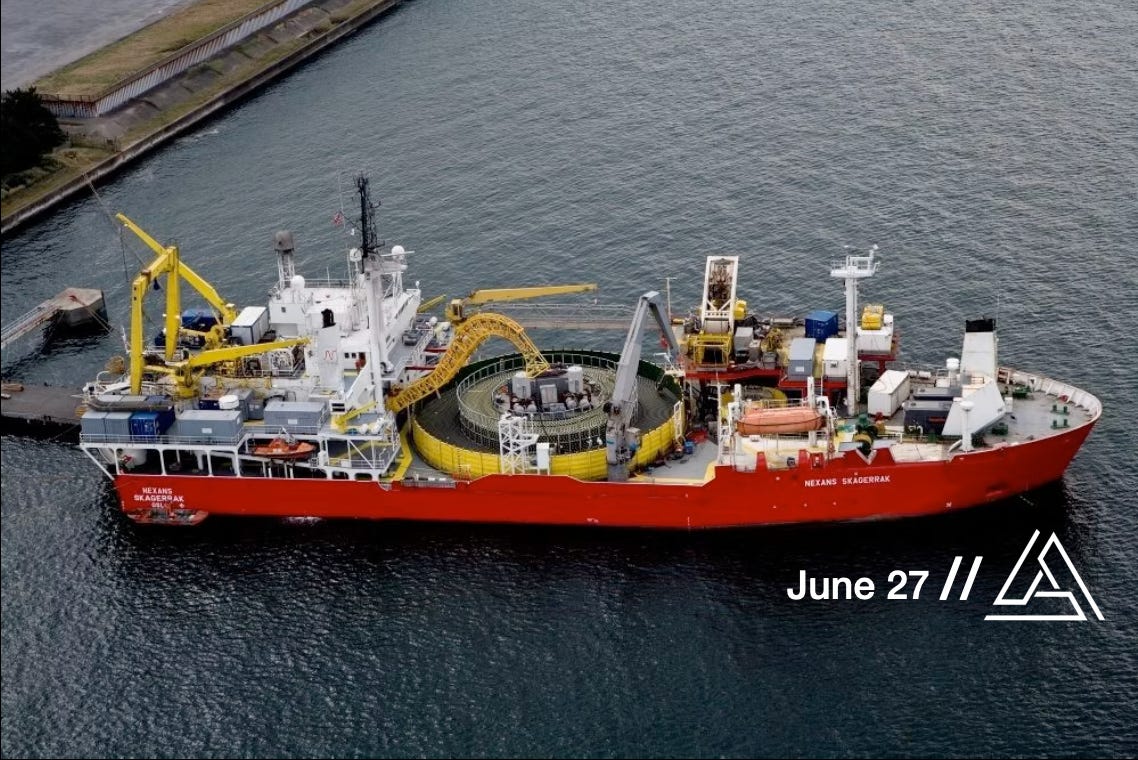
In three separate incidents late last year and early 2025 underwater cables (which traditionally carry internet data, financial data, telecommunications, cloud data, and even military information in limited instances) were severed or damaged in the Baltic Sea. A few years earlier, underwater cables carrying internet service to Taiwan were also severed.
While oceans away, these incidents have raised concerns of American data security and the commercial interests of American companies that deliver internet and telecommunications connectivity around the world — including here at home.
Our world is now a digital one and these cables can serve as the backbone of the internet by “carrying about 95 percent of intercontinental global internet traffic” — making sabotage to this data infrastructure an increasingly rich target. We’ve already seen attempts to corrupt connectivity infrastructure at power stations through both physical and cyber attacks.
Damage to these data delivery pipelines could be crippling to the tasks we look to perform everyday.
The answer to this concern is cable resiliency. What that means: more routes in which underwater cables can be laid.
Off the California coast, those available routes are shrinking, thanks to the proliferation of National Marine Sanctuaries and monuments. Today, most of the California coast is a marine sanctuary.
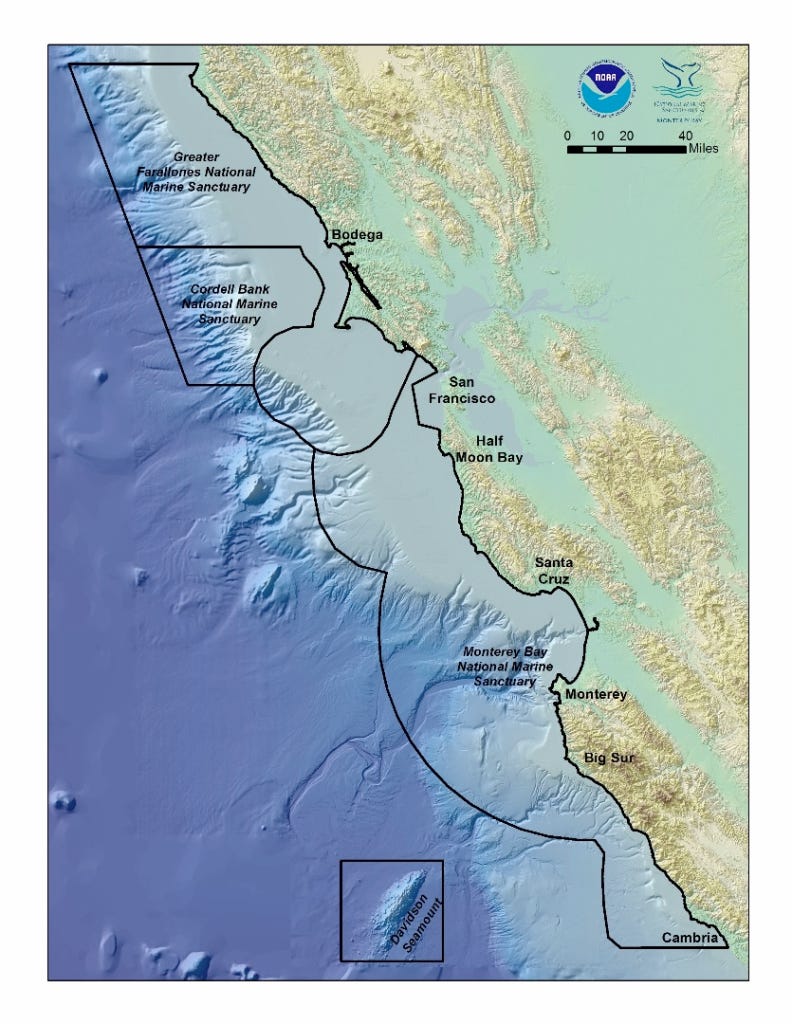
As you can imagine, laying a cable in a marine sanctuary is incredibly burdensome. In fact, one hasn’t been laid since 1999. In addition to the standard undersea cable permitting and regulatory approval process that can include up to seven government agencies, laying a cable in a sanctuary requires duplicate government action — something called a Special Use Permit (SUP), which is administered by NOAA.
These permits can take years to obtain and only come with a five year license (a typical FCC license for an underwater cable is 25 years). Meaning, if you manage to get a SUP, you’ll have to quickly turn around and go through the process again.
There are a couple issues at play here:
First — the proliferation of sanctuaries. We love our wildlife. But past Democrat administrations have vastly increased the acreage of marine monuments and sanctuaries in order to limit commercial activity. In 2015, President Obama expanded the acreage of the Cordell Bank and Greater Farallones National Marine Sanctuaries by 2.5 times the original designation.
And second — given the burden to get a special use permit, companies are opting to find alternative routes. Those routes could lead to Mexico — where many datacenters are run by Huawei.
The House Natural Resources Committee is working on a solution to this predicament. This week they advanced the Undersea Cable Protection Act, authored by Rep. Buddy Carter which would “amend the National Marine Sanctuaries Act—ensuring that undersea fiber‑optic cables can be installed, maintained, or repaired in marine sanctuaries without requiring additional federal authorization (i.e. Special Use Permit), provided they have already received approval from another state/federal agency”.
This isn’t (or at least shouldn’t be) a partisan issue. In August 2024, NOAA suspended for two years the requirement for Special Use Permits for commercial undersea cables in newly designated marine sanctuaries, signaling broad regulatory consensus that current permitting rules need reform.
Doing so would make available safe and efficient routes for new underwater cables, thus securing the physical lifeline of our digital work — a worthy cause for full House consideration.