

Chairman Westerman Prepares Congress For Permitting Reform

Good morning. With the shutdown behind us, policymakers have a full plate to keep our industrial development on pace with American innovation—not least of which includes fixing our broken permitting process. The hoops that have to be jumped through and courtrooms navigated add years and significant cost increases to building American infrastructure.
Fortunately, there is work underway in Congress to alleviate our allergy to building. One of the most significant efforts is coming out of the House Natural Resources Committee. Chairman Bruce Westerman is aiming to markup legislation which tightens the scope of NEPA reviews and significantly shortens the window for legal objections.
In anticipation of that committee action (and hopefully soon followed by full House action), we are thrilled to have Chairman Westerman share his perspective with us today.
-Sparks
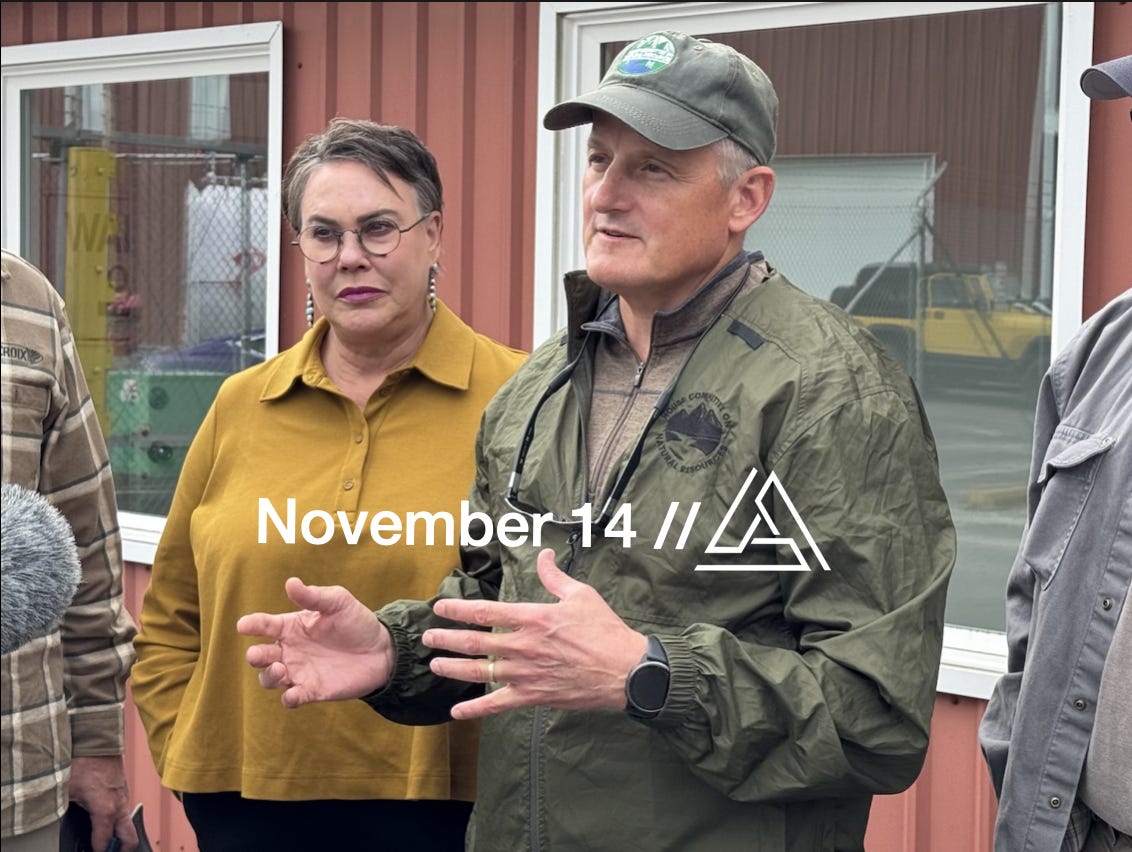
Permitting Reform Is Necessary to Power America’s AI Future
By Bruce Westerman (AR-4), Chairman of the House Natural Resources Committee
The ongoing AI boom is predicted to revolutionize American productivity and dramatically increase innovation and economic competitiveness. However, it presents a challenge that will be impossible to overcome without action. How do we produce enough energy to support the increasing demand that future AI infrastructure will require plus meet growing demands for energy in other sectors?
According to S&P Global and the American Clean Power Association, U.S. electricity demand is already expected to increase by 35-50% in the next fifteen years. America must add more energy supply or risk a power shortage that will threaten American leadership in the global AI race. Fortunately, our country is blessed with abundant natural resources that can power our future if we tap into them. One major obstacle to unleashing our energy resources is the byzantine permitting process for projects, particularly under the National Environmental Policy Act (NEPA).
Building in America compared to other countries can often take much longer and cost more due to our outdated permitting processes. Take the Mountain Valley pipeline for example. The 303-mile pipeline designed to deliver natural gas from West Virginia to Virginia was initially expected to cost $3.5 billion and be completed in four years. After over 1,528 days of NEPA delays and another 741 days of non-NEPA delays, the project cost ballooned to $7.85 billion and over six years of extra time needed to permit the project. A high-profile, specific act of Congress addressing the pipeline construction was required to get the project off the ground.
While originally well-intentioned, NEPA has been abused and expanded far beyond its intended purpose. Since its enactment in 1970, the law has been weaponized by special interest groups to slow and kill projects from transportation and infrastructure to forestry and energy development. This has resulted in endless delays for critical projects, creating uncertainty and stifling investment.
Endless regulation and litigation are wet blankets that block innovation. A law passed to help protect the environment has evolved into one that stifles common sense and stops innovative technologies and processes that can actually benefit the environment. With the rapid rise of AI and its concomitant increase in energy demand, we cannot wait years to build critical energy infrastructure. Americans need it now.
In recent years, we’ve made progress in permitting reform. The Fiscal Responsibility Act (FRA), enacted in 2023, made several key steps in reforming NEPA by implementing provisions to eliminate some inefficiencies in the permitting process and speed up timelines for critical infrastructure projects. Additionally, the U.S. Supreme Court’s Seven County Infrastructure Coalition v. Eagle County, Colorado decision narrowed the focus of NEPA reviews to the project under consideration rather than broader indirect projects, providing needed clarity on the scope of the law.
However, if we truly want to permit projects at the pace required, we need to build on the successes of the FRA and codify key pieces of the Seven County decision. That’s where the bipartisan Standardizing Permitting and Expediting Economic Development (SPEED) Act comes in.
Far too often, projects are mired in uncertainty, leaving project sponsors and potential investors in the dark as to whether their project will ever be approved or denied. The reforms in the SPEED Act will provide clarity on what environmental effects should be included in reviews under the scope of NEPA and grant more certainty for projects. To provide this much-needed certainty, the SPEED Act limits the scope of NEPA reviews to project-specific necessities so that agencies are not bogged down in endless reviews on never-ending topics, delaying a definitive conclusion.
The bill also implements a 150-day deadline for filing litigation, a vast improvement over the current standard, which is six years. Lawsuits should not be filed against a project years after its approval, as occurred with the Cardinal-Hickory Transmission Line. This line, designed to connect roughly 160 energy projects between Iowa and Wisconsin to the grid, was approved by four federal agencies before being tied up in litigation for years over a roughly two-mile stretch. This has resulted in ongoing delays more than a decade after its inception. Despite the Final Environmental Impact Statement being completed five years ago, the latest round of litigation was just resolved in September.
We have built bipartisan support for the SPEED Act because it does not pick winners and losers. All project reviews are treated equally, whether an energy transmission project, a natural gas field, a nuclear power plant, a bridge, or a data center. Both sides of the aisle should be able to find common ground on our nation’s permitting challenges and agree that we need to modernize the process to meet the energy and infrastructure demands of the 21st century.
The AI industry understands the importance of the SPEED Act. Organizations supporting its passage include Google, OpenAI, the Data Center Coalition, and the AI Supply Chain Alliance, along with scores of organizations and businesses in sectors that build, innovate, and truly understand the need for permitting reform.
We must end the days of NEPA reviews as an insurmountable barrier to infrastructure development. The SPEED Act will deliver urgently needed reforms and allow America to build. Without it, we risk losing the AI race.