

Congress Looks to Tech to Fix Our Forests
Plus, What's the Story on "AI Layoffs"? And An Event Announcement With Secretary Duffy


Congress is moving towards passing a bill that integrates new technologies to help fight wildfires.
The Fix Our Forests Act passed the House in January following the LA fires, and the Senate companion advanced out of the Ag Committee last week.
The two tech provisions of note in this legislation include:
A pilot program to deploy and test new firefighting technologies (i.e. drones, sensors, satellites, and communications)
An X prize for fire mitigation innovations, such as materials and systems to protect structures and communities.
Representative Young Kim (CA-40), an architect of tech’s integration in this bill, told us:
Our first responders need every tool available to help fight wildfires in the 21st century. I was proud to introduce the Wildfire Technology DEMO Act, which passed the House in January through the bipartisan Fix Our Forests Act, to encourage federal agencies to partner with private innovators and test cutting-edge technologies on the fireground. This legislation will help us more quickly develop and deploy emerging technologies for wildfire response and better allow firefighters to keep our communities safe.

The Path Forward
There are some discrepancies between the House and Senate bill that will need to be ironed out in the end, such as the House taking a more tech-agnostic approach while the Senate carved out specific pilots for specific technologies (e.g. satellites).
But Congress’ message for commercial integration matches DOI leadership:
Secretary Doug Burgum–a former entrepreneur and Microsoft executive–has enthusiastically looked to technologists to rethink how the agency does its work.
Newly confirmed Under Secretary of Agriculture for Natural Resources and Environment Michael Boren–who has the Forest Service under his purview–is a former technology founder.
The startup ecosystem to provide this tech is growing.
Companies like Pano and WatchDuty are providing new tools to more quickly identify early fires and communicate their statuses.
Satellite data interpreter SkyFi wants to make it easier for planners and first responders to see what’s happening on the ground from space.
Many other young companies swarmed the Hill with meeting requests.
This is exactly the type of congressional directive we need to see more of. It’s not enough for the administration to issue executive orders. Agency-directed efforts for these new programs and partnerships need congressional authorization—either the ability to either reprogram funds or establish new funding).
The shutdown has stunted congressional action this Fall. When resolved, we hope to see a similar zeal from Congress to accelerate tech adoption in government as we see from the ones working to build that tech in the first place.
What’s the Real Story Behind AI Layoffs?
The big news this week was the impact AI is having on the corporate workforce.
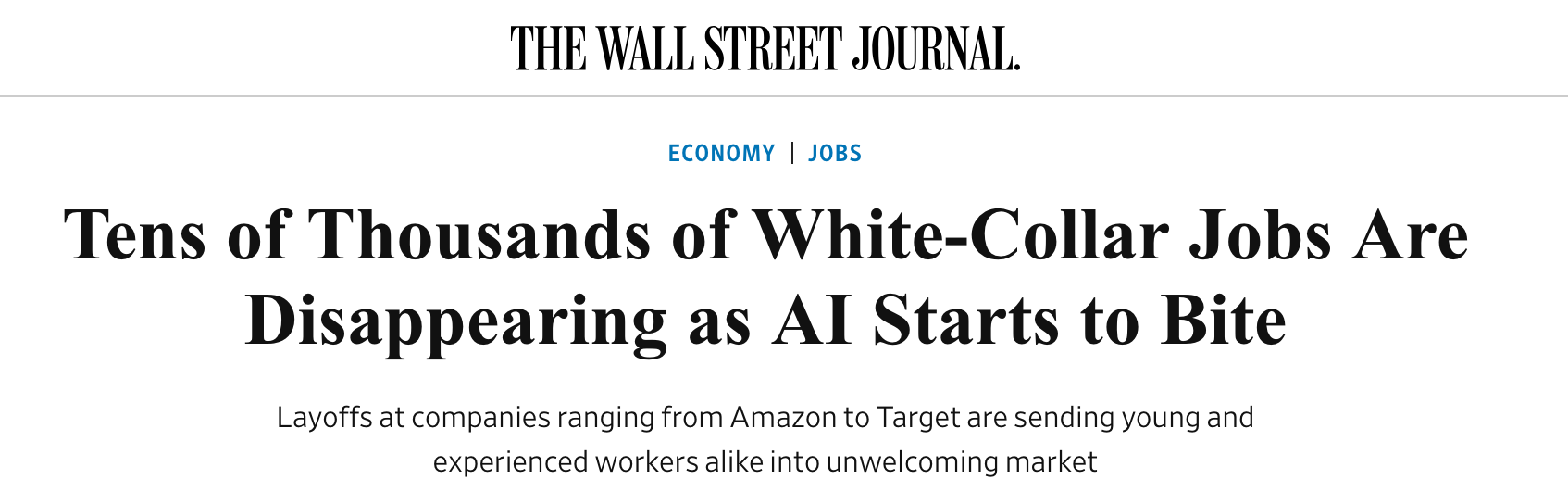
Amazon, UPS, Target, and many others have recently announced the reduction of managerial headcount. Here’s the Wall Street Journal:
Behind the wave of white-collar layoffs, in part, is the embrace by companies of artificial intelligence, which executives hope can handle more of the work that well-compensated white-collar workers have been doing. Investors have pushed the C-suite to work more efficiently with fewer employees.
It is also tightening the options for those who are looking for employment. Around 20% of Americans surveyed by WSJ-NORC this year said they were very or extremely confident that they could find a good job if they wanted to, lower than in past years.
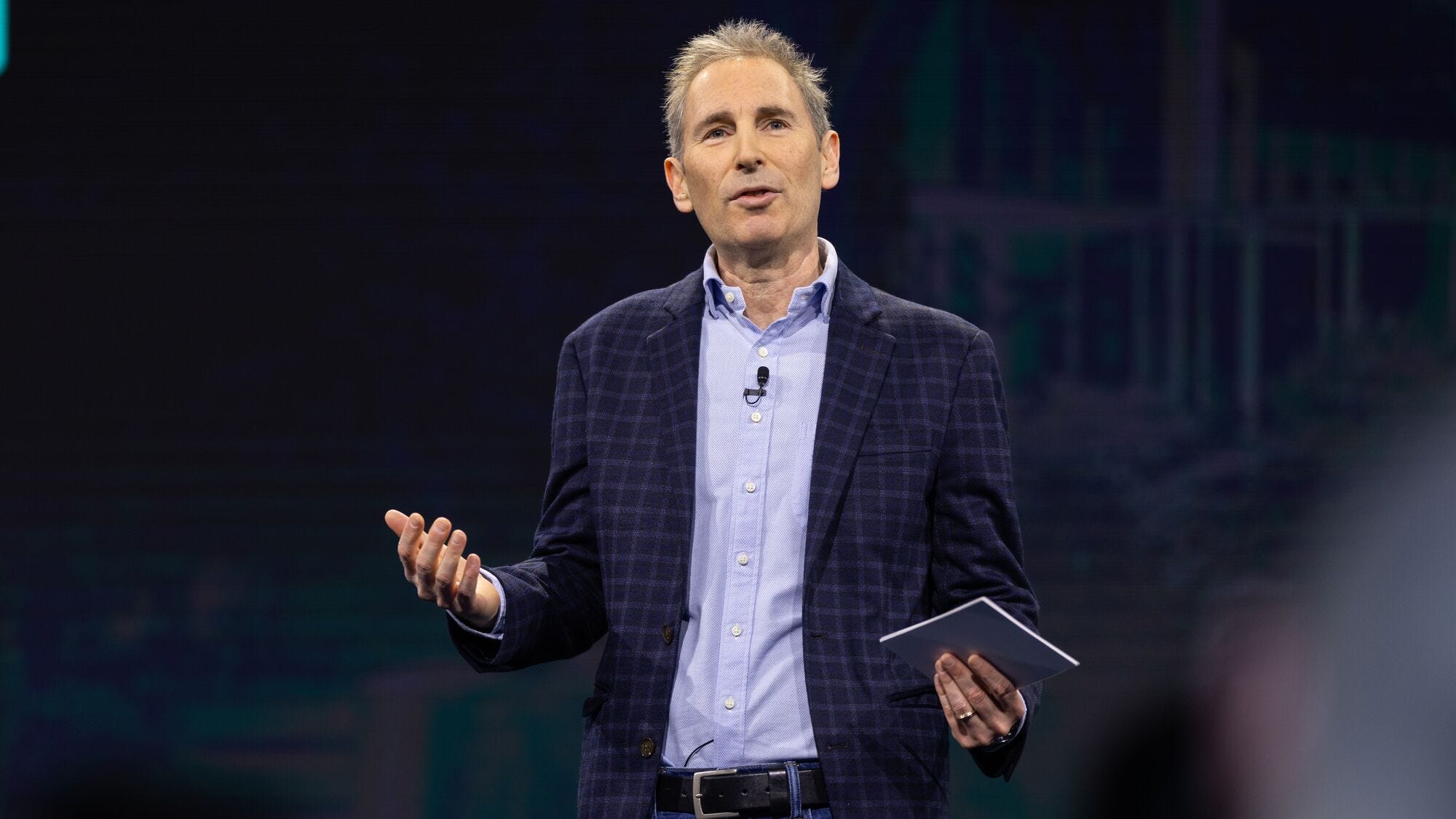
Amazon CEO Andy Jassy telegraphed this in June, telling employees AI would shrink headcount through “efficiency gains.” Now it’s happening, across many areas of the business: AWS, HR, operations, devices.
Is this the future of work arriving, or is AI a convenient cover for cutting a bloated business?
Probably both. And that ambiguity is the challenge.
Genuine substitution is happening. Amazon is deploying generative AI across fulfillment networks for inventory placement and demand forecasting. It’s spending $100+ billion on AI infrastructure in 2025, up from $83 billion last year. And there are widespread predictions that organizations will use AI to eliminate more than half of middle management positions in the coming years.
There’s certainly a correction happening here. Amazon tripled corporate headcount between 2017-2022. The tech industry saw 152,922 layoffs in 2024 and nearly 100,000 more already in 2025. This is a sector-wide adjustment to pandemic-era over-hiring.
AI provides strategic cover. Why not tell shareholders you’re laying off people because AI investments will improve things, instead of saying because business just isn’t good? The narrative works, as markets reward “AI-driven efficiency,” not “we overbuilt.”
Determining the Difference
Real business transformation comes with capital expenditure on AI infrastructure, new hiring in adjacent roles, and clear productivity gains. Opportunistic cuts show layoffs exceeding automation capabilities, no corresponding investment, and industry-wide moves in the same quarter suggesting other macroeconomic factors.
If “AI made us do it” becomes standard justification to all cost-cutting efforts, it obscures the real economic and workforce story.
Bottom Line
AI is and will continue to replace corporate jobs, particularly routine coordination roles. Companies will use AI to justify many decisions, some more legitimate than others. The work isn’t picking one narrative. It’s developing the framework to distinguish them in real-time and building differentiated policy responses (i.e. reskilling support for genuine transformation or standard safety nets for business cycles).
Amazon has telegraphed this all openly. Transparent or CYA? Probably both.

Live with Secretary Duffy
We are excited to have Transportation Secretary Sean Duffy join Breitbart, ALFA, and CGCN for our latest conversation with a member of President Trump’s cabinet.
Secretary Duffy has embarked on a number of innovation initiatives such as fast tracking Advanced Air Mobility Vehicles and green lighting supersonic flight over land.
We can’t wait to hear what he has to say.
If you would like to join us, please RSVP to DuffyRSVP@breitbart.com.