

In Canonizing “Patron Saint of the Internet,” Vatican Recognizes the Network Effect
Plus, your lineup of tech-aligned Hill activity this week


Carlo Acutis—the 15-year-old who died in 2006 and became the Catholic Church's first millennial saint this month—built websites cataloging Eucharistic miracles, coded to spread his faith…and played Halo. Referred to as “the Patron Saint of the Internet,” his tomb livestreams on YouTube. He lies in Nikes and a zip-up sweatshirt, credited with two miracles that doctors described as “medically inexplicable.”
Notably, Carlo kept a strict discipline online—never more than an hour a day—and warned against losing originality in a world of imitation: “We are all born as originals, but many die as photocopies.” That mix of digital savvy and restraint, of coding fluency and spiritual reflection, is partly why the Vatican sees him as emblematic of a new age.
But the Church's embrace of Acutis also signals recognition of something larger: the internet has dismantled traditional information gatekeepers. A teenager with coding skills can reach millions without institutional backing. The printing press broke the medieval Church's monopoly on information distribution. The internet eliminates intermediaries altogether.
From Medieval Monopolies to Digital Distribution
In medieval Europe, the Church controlled information outright through hand-copied Latin manuscripts. The printing press enabled the emergence of nation-states by standardizing languages and creating modern nations and cultures. Now, the internet empowers anyone with a connection to bypass traditional authorities entirely and find their clique or anyone with shared interests online.
For Acutis, that meant logging known Catholic miracles. A British-born Italian teenager teaching himself programming, building digital infrastructure for faith. The Church that once held information monopoly through monasteries now competes in an attention economy where a teenager's Minecraft server might command more mindshare than a cathedral.
Strategic Recognition and America's Competitive Advantage
Pope Francis’ decision to canonize Acutis while the Vatican increasingly focuses on AI shows institutional awareness–relevance requires engaging where people actually gather: online. The internet–and AI with it–will prove more transformative than the printing press, which took 400 years to fully reshape Europe. We're only a few decades into the internet age.
Meanwhile, China doubles down on digital authoritarianism, desperately maintaining control through surveillance and censorship–in turn affording the West a golden opportunity. Embracing networked empowerment, as Rome just did, could be our decisive advantage.
Put simply, Carlo’s canonization is a recognition that legitimate authority now flows from authentic connection, not institutional position. Power structures can either embrace this reality—or be overtaken by it. The internet is rebuilding society’s scaffolding. And the Pope is ahead of the curve.
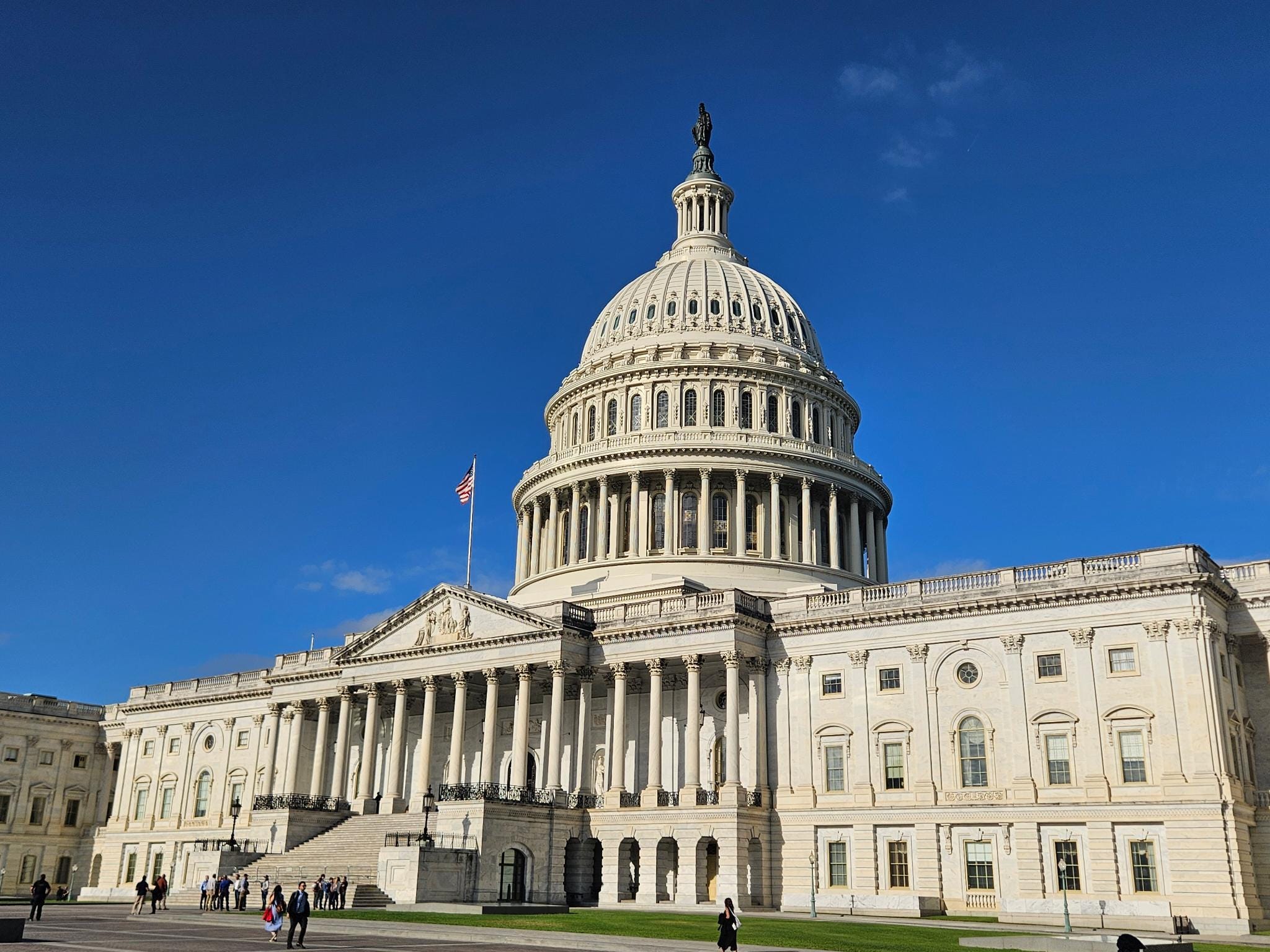
On The Hill
This week both the House and Senate will begin consideration of their respective National Defense Authorizations. From a top line perspective, the Senate bill, S.2296, authorizes $878.7 billion for the newly renamed “Department of War” while the House version reflects the $848.2 billion included in President Trump’s budget request for the Pentagon.
But there’s a lot more to it than that, with the House bill emphasizing “streamlining procurement for effective execution and delivery” and the Senate bill including several provisions to ensure more technology from more companies makes it into the hands of our warfighters. ALFA will have more on this bill—and its advanced tech ambitions soon.
***
Permitting Reform
The push for permitting reform is on. On Wednesday, September 10, the Natural Resources Committee will hold a hearing on three bills to expedite building the infrastructure we need to power our economy, technology, and way of life.
In a pre-hearing memo, the committee points out that “NEPA is the most frequently litigated environmental statute, and NEPA-related litigation on an environmental impact statement (EIS) takes an average of 4.2 years to resolve.”
Chairman Westerman’s SPEED Act (H.R. 4776) would “bring common sense to judicial review of NEPA claims by stipulating that the sole remedy available to courts in deciding NEPA cases is to remand the action back to the lead agency to remedy deficiencies, rather than allowing courts to kill the entire project. It requires NEPA claims to be filed within 150 days, and only by claimants who submitted a comment during the public comment period.”
“The State of Our Nation’s Federal Forests”
We’ve talked about technology’s potential to prevent, identify, and fight forest fires. Today at 10:15 AM the the House Natural Resources Committee holds an oversight hearing on forest health which obviously has a direct effect on fires.
The committee notes: “On June 12, 2025, President Trump issued a second forestry-related EO entitled ‘Returning Common Sense to Wildfire Prevention and Response’ “ — which “directs USDA and the U.S. Department of the Interior (DOI) to consolidate their wildland fire programs; supports local fire response and the adoption of new technology.”
The House passed the Fix Our Forests Acts in January (with 64 Democratic votes) which “streamlines federal technology procurement and creates a new pilot program for technology adoption (Sec. 303).”
The Senate held a hearing on this bill back in March but no further action has been taken.
RELATED: The Senate’s rule changes to more swiftly consider presidential nominees should soon tee up the confirmation of Michael Boren to lead the U.S. Forest Service.
Weather Act Reauthorization Act
On Wednesday, the Science, Space, and Technology will markup the Weather Act Reauthorization Act which “Improves the National Oceanic and Atmospheric Administration’s weather research, supports advancements in weather forecasting and prediction, and expands commercial opportunities for the provision of weather data.”
Senate AI Action Plan
OSTP Director Michael Kratsios, one of the architects of the White House AI Action Plan, testifies in the Senate on Wednesday.