

Jared Isaacman Is On A Mission
Plus, white collar job growth in the AI-era

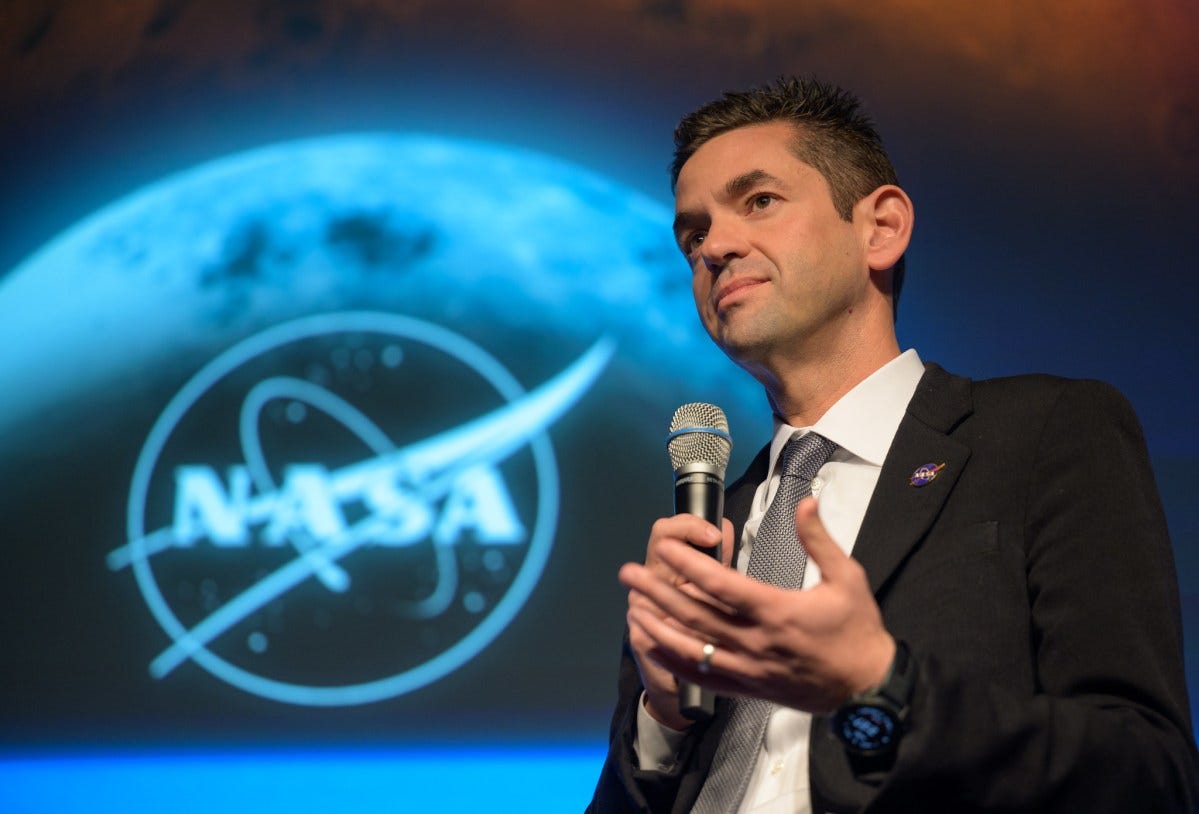
Jared Isaacman became NASA Administrator late last year, the same day President Trump reaffirmed his 2017 directive to return to the moon. Isaacman’s mandate was clear. The path he was handed to achieve it has been far from it.
The program to reach the lunar surface is called Artemis, and each launch (I, II, III, etc.) marks a step closer. The problem, though, is that since it was established, only Artemis I has launched.
Artemis II, which will send humans around the moon, is set to take place this spring. And Artemis III, which was originally going to be a moon landing but is now a crewed test mission, is scheduled for 2028.
As it stands today, the Artemis launch cadence is once every three years. That’s painfully slow considering the time lapse from Apollo 7 to Apollo 8 in 1968 was just two months.
Isaacman has said (and SpaceX has shown) it takes repetition to maintain a space program with regular launches; especially one with ambitions for a permanent lunar presence. The custom-built SLS rocket doesn’t accomodate that. So NASA’s plan is to standardize the SLS so that launch cadence can increase to one every ten months.
To do that, Isaacman must also contend with a more systemic issue: brain drain. The engineers who launched earlier rockets and supported orbital missions are long gone. And the new generation is working at SpaceX, Blue Origin, or any number of commercial enterprises.
This week, NASA and the Office of Personnel Management announced the creation of NASA Force, a program that seeks to bring talent into government to prepare for near-term missions while also training NASA’s next generation.
Isaacman was handed a dead weight. But he’s working hard to turn it back into one of America’s prized possessions.
🚞 This morning at 11:30 AM, Transportation Secretary Sean Duffy will deliver remarks at Washington Union Station and unveil the Department’s new “Freedom Moves You” campaign. If you’re in the area, we encourage you to stop by. 🇺🇸
Field Notes
🏃♂️WHOOP CEO Will Ahmed is tired of hearing about how AI will destroy the white collar workforce. This week, the company announced it will add another 600 jobs to its current 800 person workforce.
In a quote to Bloomberg, Ahmed said:
“There’s a lot of companies that are doing layoffs right now and blaming it on AI. But they’re actually doing layoffs because the businesses aren’t performing particularly well. And it’s a convenient excuse.”
The COVID-era buildout considered a future that never arrived. Combined with AI tools that are expanding what an employee can achieve, a natural correction is occurring. But as new companies build around and on top of AI, new opportunities will emerge, just as WHOOP is demonstrating.
🚧 Punchbowl is reporting this morning that House Republicans will pursue a second reconciliation package this year. Our experience in this process tells us there will be no shortage of ideas from members of Congress as to what that actually looks like. And with such a slim margin, unanimity is a nearly impossible feat. In the spirit of what will surely be a spirited conversation at their annual retreat this weekend, let us offer up a target: permitting reform.
It’ll be hard. But pursuing something with minimal costs and that will produce tangible results is a worthy and achievable goal. We know the Senate parliamentarian spiked a similar effort in the Big, Beautiful Bill. But get ahead of it and find a way to get to yes.
🚜 The House Agriculture Committee advanced the Farm Bill, which directs federal policy for America’s farmers and ranchers. The bill reflects many of the technology advancements deployed in the fields such as precision farming, virtual fencing, and fire prevention. It passed out of the committee with seven Democrats and every Republican supporting it, showing big bipartisan legislation is still possible.