

Making It Rain: The Testimony You Didn't Hear

Yesterday, the Oversight and Government Reform DOGE subcommittee held a hearing titled “Playing God with the Weather – a Dangerous Forecast.”
As the title suggests, there was some skepticism thrown the way of weather modification efforts, specifically, cloud seeding.
Defined by witness Dr. Roger Pielke of AEI, “Cloud seeding is an effort to modify precipitation over a small scale” whereas geoengineering “is an effort to counter the effects of human-caused climate change at the planetary scale.”
These two are not the same.
Cloud seeding by companies like Rainmaker “work with natural clouds to precipitate more rain or snow” by distributing salt or silver iodide in a cloud that is holding water that’s not precipitating. The water then bonds to the material and grows into big enough particles to fall to the ground.
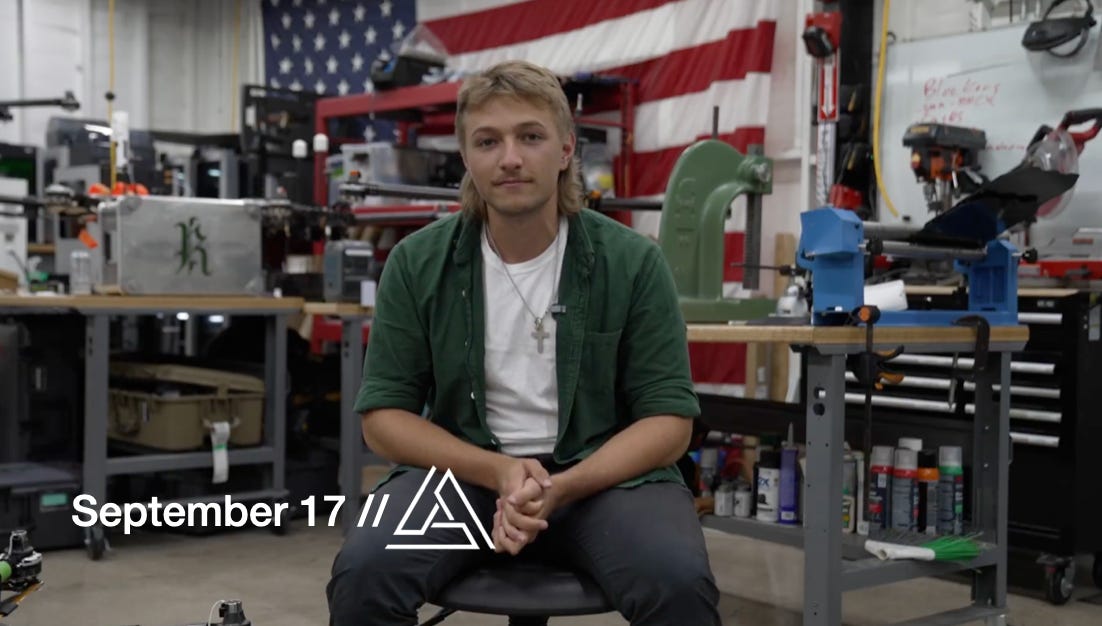
“What we want, what everyone wants, is a future where we have enough water for our forests to be green, for our farms to be lush, and for kids to grow up swimming in the lakes that their parents did. That’s basically the only thing that I care about right now: making more fresh water,” Rainmaker CEO Augustus Doricko said in a video posted on X following the hearing.
The hearing centered on three main questions:
Is It Being Used and Does It Work?
Is It Safe?
Are We Playing God With This Technology?
Unfortunately, we didn’t hear testimony from practitioners or customers of cloud seeding. We think that perspective is important, so we jumped on a call with Augustus to sort some of these questions out.
This conversation was edited for clarity.
Is It Being Used and Does It Work?
Right now, cloud seeding is being done in nine states desperate for more water. Witnesses at the hearing stated that we don’t really know if cloud seeding works. Past research supports that statement. But modern radar and forecasting advances have shown that it does. There’s more to measure but the fact it is occurring shows the lengths many western states will go to replenish their aquifers and provide water to farms.
Is It Safe?
“Yes, I would guzzle gallons of water from a cloud that was seeded,” Augustus told me.
The small amount of silver iodide that is included in an operation is spread over miles and traces of material on the ground are nearly impossible to measure. In fact, silver iodide has been used in seeding for decades in states such as Utah, Idaho, and Wyoming and there is no research that shows an adverse effect on those ecosystems.
Are We Playing God With This Technology?
No. In fact, the weather is being modified through many of the industrial choices we make today. And no, we are not talking about climate change.
Asphalt’s heat absorption can create higher local air temperatures and solar farms can influence local cloud formation.
These–and many other industrial advances–are good. And we aren’t stopping this progress because of marginal weather changes here or there. The same thinking should be applied to cloud seeding, which, again, seeks to “modify precipitation over a small scale.”
***
It’s easy to take rain for granted if you are in a state or region that gets plenty of it. But for those that don’t, water is existential. The old phrase that you often still hear in California’s Central Valley "Whiskey is for drinking and water is for fighting” sums it up.
We have to take potential solutions seriously, which is why it is important to hear from practitioners or customers of cloud seeding.
Scrutiny is warranted and welcomed. But the answer isn’t to shut it down. Instead, we should better monitor it. For instance, the EPA should dispatch observers to seeding operations periodically or regularly (just as the FAA does with drone tests) to test the snow or rain that falls. And increased transparency around where, when, and how seeding operations are happening should be instituted so that the public knows it's happening.
As stewards of both innovation and the environment, we owe it to ourselves and future generations to pursue the paths that create a better life for our citizens.