

Secretary Duffy Discusses Modernizing Air Traffic
“If I think about what a brand new air traffic control system looks like, that's the software.”

Good Afternoon.
We just wrapped up our event with Transportation Secretary Sean Duffy, where he made news on the impact the government shutdown is having on commercial flights. He also discussed how he plans to fulfill the mission to modernize our air traffic control system. Our dispatch is below.
But first, let’s review our election day forecast and see how it turned out.
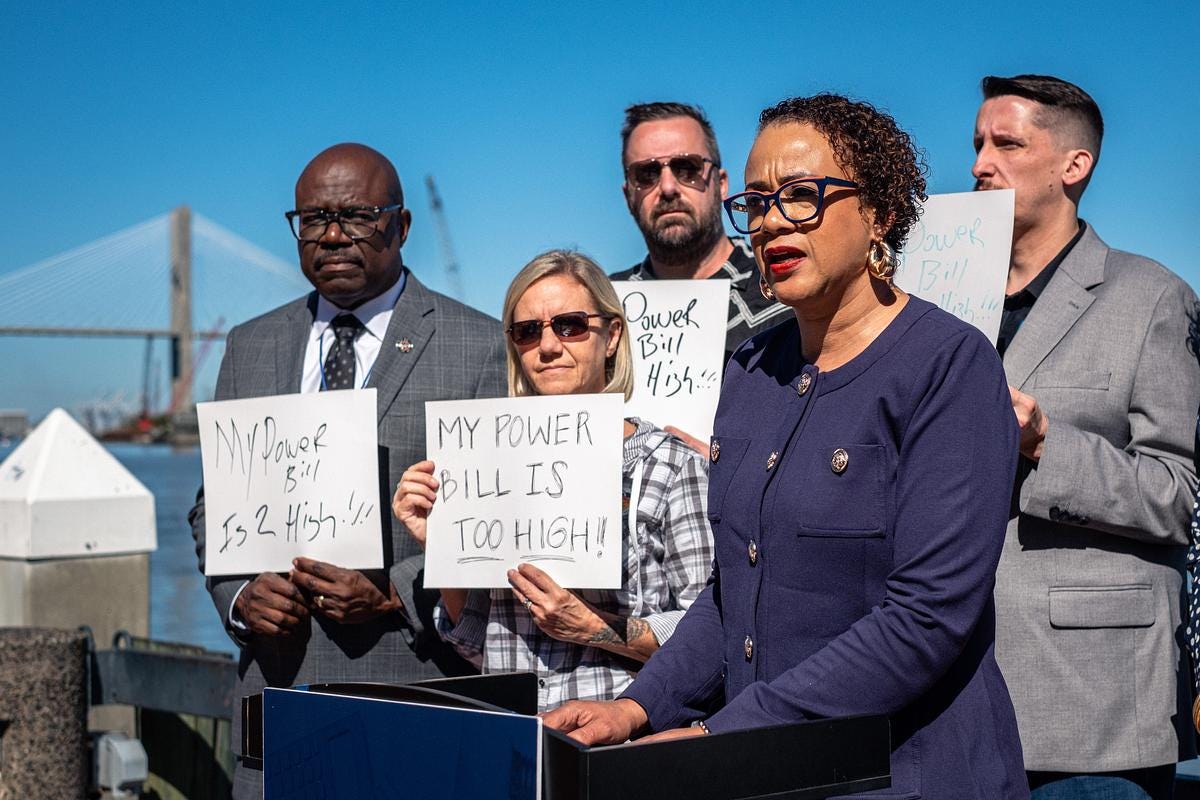
Georgia Voters Energized By Electricity Prices
As we thought might be the case, the two Public Service Commission seats in Georgia turned out to be quite the story on election day.
From Bloomberg:
1.5 million Georgians turned out for the election, a massive increase from the meager 120,000 voters who turned out in the primary elections for those races.
More than 63% of those who cast ballots Tuesday voted to oust Republican incumbents Tom Echols and Fitz Johnson and elect Democratic newcomers Alicia Johnson and Peter Hubbard. That represented a huge swing from the 47% that Democratic candidates got in the two most recent rounds of elections for the utility board, in 2018 and 2020.
The rising cost of electricity has firmly established itself as a preeminent political issue.
We’ve talked extensively about the need for more power to achieve our country’s technological and manufacturing ambitions. And the upshot is that investing in that power—regardless of your view on the promise or peril of AI—will be a huge net-positive for our country.
But the costs to build the needed infrastructure can leave constituents with higher bills—at least in the short term. That’s in part what happened with Georgia’s PSC and new nuclear reactors in the state.
With our politics now operating on a 24/7/365 basis, serving the immediate interest has become more electorally promising than planning for the long term. Put differently, if you don’t win the politics, you’ll never get the policy.
This all makes for a critical next 11 months. Republicans have to address the rising energy costs amidst increasing demand. Failing to do so sets the stage for a legislative majority that is far less favorable to the types of policy reforms we need to both keep the lights on and keep our country competitive.
Secretary Duffy: “Look at the Data”
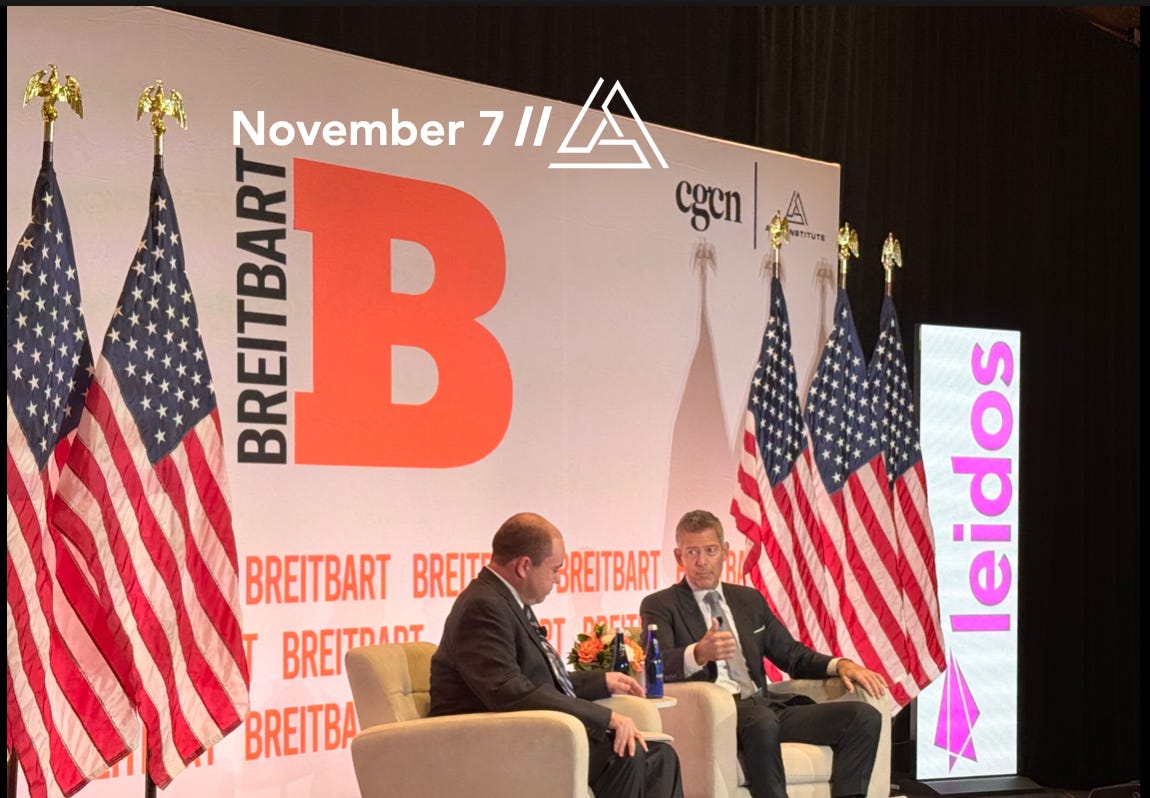
If you’re traveling over the next several days (and who knows, maybe weeks) and find your flight delayed or canceled, you’re probably wondering what’s actually driving that decision: politics or procedure?
At today’s conversation with Secretary Duffy hosted by ALFA, Breitbart News, and CGCN, the Secretary was clear on what’s informing his decisions: data.
He told us today:
Through the FAA safety team we’re seeing loss of separation in the air space–spacing for aircraft, there’s been incursions in those separations and those numbers have gone up. There’s more incursions on the ground. We’ve had more complaints from pilots that have said there’s less responsiveness or the controllers seem more stressed. So the numbers are going in the wrong direction and so what is our response? Our response is to take pressure out of the system.
That pressure reduction started today by taking a percentage of flights out of the sky. The Department of Transportation mandated that all commercial airlines reduce their schedules by 4 percent, with an escalation of 2 percent every two days until it caps at 10 percent by November 14. If the shutdown extends, it could go to 20 percent.
Beyond the severe inconvenience to passengers, these reductions will soon have an impact on commerce, as UPS, FedEx and other carriers will face congestion getting goods to where they need to go.
Secretary Duffy is facing some of the hardest challenges caused by the shutdown: ones that affect the flow of daily life. But with a clear-eyed focus on data, one can have confidence that safety won’t be sacrificed.
Modernizing Air Traffic Control
Long before having to manage this current crisis, the DOT has been engaged in the hard process of modernizing our air traffic control system which is outdated and in desperate need of rebuilding.
Secretary Duffy is proposing a common automation system.
I think about what a brand new air traffic control system is going to look like. That’s the software.
The One Big Beautiful Bill pledged $12.5 billion to update this system but was overly prescriptive. The total cost of the transformation project is $31.5 billion. The good news is that bipartisan support in Congress is coalescing around this proposal. But as we see currently, Congress’ ability to find common ground on funding has been … well, challenging.
There are several obvious reasons we should want a state-of-the-art ATC system. Safety being reasons 1, 2, and 3. But an updated system could also be a big step to solving the current air traffic controller shortage (currently at 2,000).
Innovative and up-to-date technologies are attractive for young workers who might have been discouraged from the large learning curve of outdated technologies and training programs. While the Department is also providing incentives for current controllers to stay on the job, it’s focused on incubating the next generation of talent.
The road to modernizing our air traffic control systems won’t be easy, but the long-term success of Secretary Duffy’s efforts represents one of the most critical investments into safety, efficiency, and resilience in U.S. transportation.