

Senator Tom Cotton: The DATA Act Will Unleash A New Energy Era

Good morning. Today we are sharing a piece by Senator Tom Cotton, who recently introduced legislation to allow data centers and other large-scale industrial projects to generate and use electricity on-site. If you recall, the President recently said that his administration is working with technology companies “to ensure that Americans don’t ‘pick up the tab’ for their POWER consumption, in the form of paying higher Utility bills.” Proposals like Senator Cotton’s could go a long way to helping achieve that.
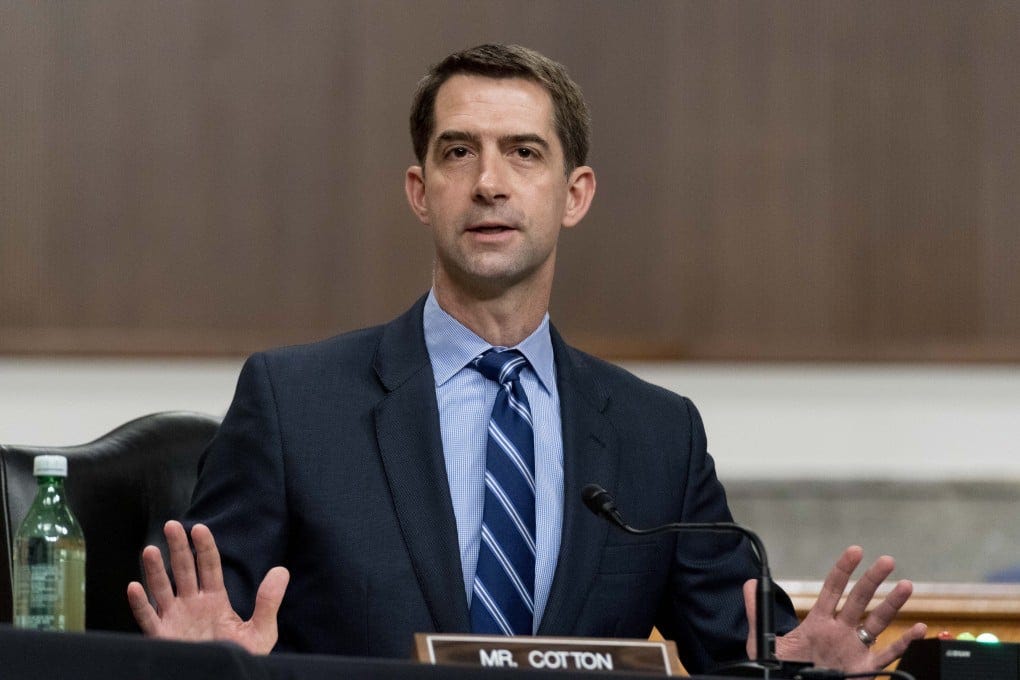
The DATA Act Will Unleash A New Energy Era
By Senator Tom Cotton
America’s electricity system is under strain. As inefficiencies mount and electricity costs climb year after year, families and manufacturers alike get stuck paying the price.
In recent years, rising prices, a stretched supply chain, accelerating demand, and an outdated regulatory framework have put an undue burden on American consumers. Additionally, the lack of affordable, reliable, and abundant power poses a national security risk as we compete with Communist China in advanced manufacturing, artificial intelligence, and data infrastructure.
But the energy challenge at hand is not due to a lack of resources at home. America is rich in natural gas, nuclear technology, and emerging power innovations. The real problem stems from an obsolete, overbearing federal policy that forces every new, large energy user onto the same, congested grid. Faced with no other alternative, massive data centers and advanced industrial facilities must navigate years-long interconnection queues, which trigger costly grid upgrades that are later passed on to American consumers and their families.
I introduced the DATA Act to provide a commonsense solution. My legislation will allow large facilities to build and operate fully isolated, off-grid power systems without the burdensome regulatory requirements that apply to traditional utilities. For Arkansas, the DATA Act offers a direct benefit: by allowing large facilities—such as data centers and advanced manufacturers—to build fully off-grid power systems, the state can attract new industries without forcing expensive grid upgrades that would otherwise show up on Arkansans’ utility bills.
By enabling off-grid development, the DATA Act will relieve pressure on an already overstressed electric system and Arkansans budgets. Instead of forcing ratepayers to expand transmission and generation to accommodate enormous new loads from data centers and other advanced facilities, large data centers can invest their own capital in self-contained energy systems tailored to fit their needs. In short, this will result in fewer expensive grid upgrades, less congestion, and lower costs for households and small businesses that remain connected to the energy grid.
Moreover, the DATA Act will strengthen America’s economic competitiveness and strengthen our national security as we compete with Communist China in advanced technologies. Artificial intelligence, cloud computing, and advanced manufacturing are global industries requiring massive amounts of reliable power. While Communist China subsidizes power-hungry industrial facilities, the DATA Act will ensure that we can outcompete Communist China without forcing American families to cover the costs of corporate energy demand with expensive electric bills.
Finally, the DATA Act will not weaken the reliability of our power grid or stifle necessary federal oversight. The DATA Act’s exemption will only apply to systems that are truly isolated from the grid. The moment a facility reconnects or exports power, full federal authority resumes. This is not deregulation for its own sake—it is targeted modernization that recognizes the difference between grid-dependent utilities and private, self-sufficient energy systems.
America cannot afford to let outdated rules slow our economic growth or hand a strategic advantage to our adversaries. The DATA Act will modernize electricity regulation for a new era—one defined by homegrown advancements and innovation to ensure that America sets the pace for the industries of the future.