

The Insanity of AI Advocacy
Righting the Wrong Approach to an AI Framework

Good morning. Sunday’s release of the National Defense Authorization Act represents one of the remaining bastions of true congressional deliberation. But it doesn’t have to be. Today, we share another issue of national importance that demands an equally dedicated effort.
The Insanity of AI Advocacy
By Matthew Sparks
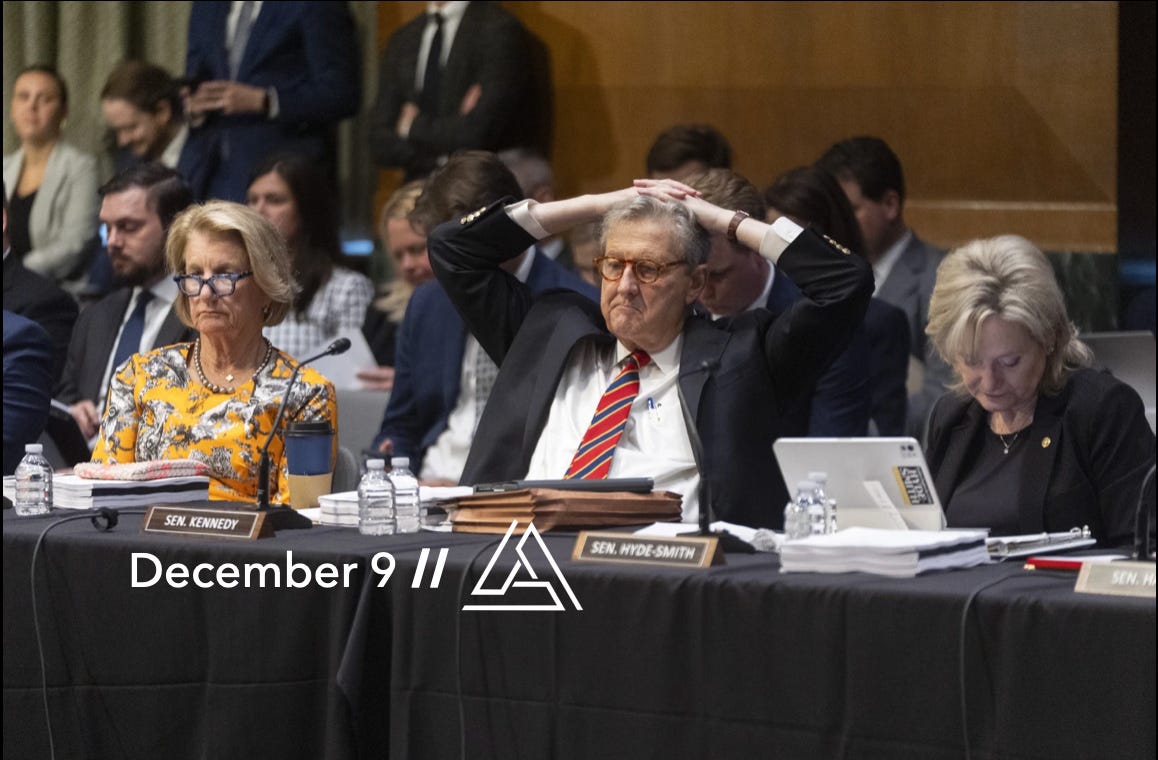
Everyone knows the classic definition of insanity is trying the same thing over and over again and expecting different results. By that standard, it appears some corners of the AI advocacy world have gone insane. I am referring, of course, to the latest attempt to shoehorn the so-called “AI moratorium” on state-level AI regulations into this year’s must-pass NDAA. That effort failed, just as it did earlier this summer after a bipartisan group of Senators and state leaders expressed strong opposition to its inclusion in the Big, Beautiful reconciliation bill.
The problem here is two-fold. For starters, opposition to these efforts is tied to a stubborn public concern around artificial intelligence. Half of people polled by Pew Research said “they’re more concerned than excited about the increased use of AI in daily life.” Even more say the societal risks outweigh the benefits.
Yet from the time the moratorium failed last summer to today, little effort has been made to sway public opinion or the no votes in Congress. By my count, there has been only one congressional hearing dedicated to the idea of setting a federal AI standard since the summer. And let’s be honest, uninspired 30-second narrated spots might be great for the Washington consultant class, but they don’t move the needle.
The tragedy in this is that 50 different state AI regulatory regimes is untenable. The Administration is right to push for “One RuleBook For AI.” A patchwork of laws would make it impossible for productive uses of AI to reach farmers, small businesses, and patients.
A federal standard is the right path to ensure our country secures the benefits of AI for everyone.
That, however, leads into the second critical issue at-hand: the continued absence of any actual proposed federal standard. It’s an uphill battle to ask lawmakers to ban state action without telling them what will stand in its place.
This obviously won’t be easy. Nothing worth doing in Washington is. But as I have written before, there are ways to tackle expansive and vexing policy concerns that both produce member buy-in and reassure an anxious public. In a Capitol where members of Congress are now clamoring for a sense of renewed purpose, this would be as worthy a cause as any towards which to direct their attention.
The good news is that Congress is not starting from scratch. While there has been almost no dedicated committee effort on a federal standard itself, there have been plenty of hearings that have focused or touched on AI this year.
The challenge now is forcing Congress to actually exercise its legislative muscles. Not via a last minute “take it or leave it” airdrop play from on high. But through an open and concentrated collaboration from members across the ideological spectrum who have demonstrated they know enough and care enough to get this right.
Doing anything less on an issue as important as this would simply be insane.