The Woman Rewiring American Medicine
"A healthy person wants many things. A sick person wants just one."
Imagine a medical journey that's personal.
Imagine your physician looking you in the eyes and hearing what you're saying instead of looking into their laptop, typing as they talk.
Imagine your doctor having access to the largest medical library in the world that translates millions of medical journals into real-life correspondence in minutes.
Imagine your scans getting a second, third, and fourth opinion immediately — either spotting something a radiologist can't see or waving off an initial red flag.
And, God forbid, if these images identify something new or not yet understood, something for which there is not yet an accepted treatment, imagine that your doctor can access, process, and distill the research and knowledge of thousands of specialists in order to devise something new to fight this disease — giving you or your loved ones hope for a brighter future.
This is a far cry from the healthcare system many of us have grown accustomed to — one that is saddled with bureaucracy, paperwork, staff shortages, overworked professionals, high costs, and even more paperwork.
That vision is now becoming a medical reality thanks to artificial intelligence. But there's nothing artificial about the real life impact these advances can have.
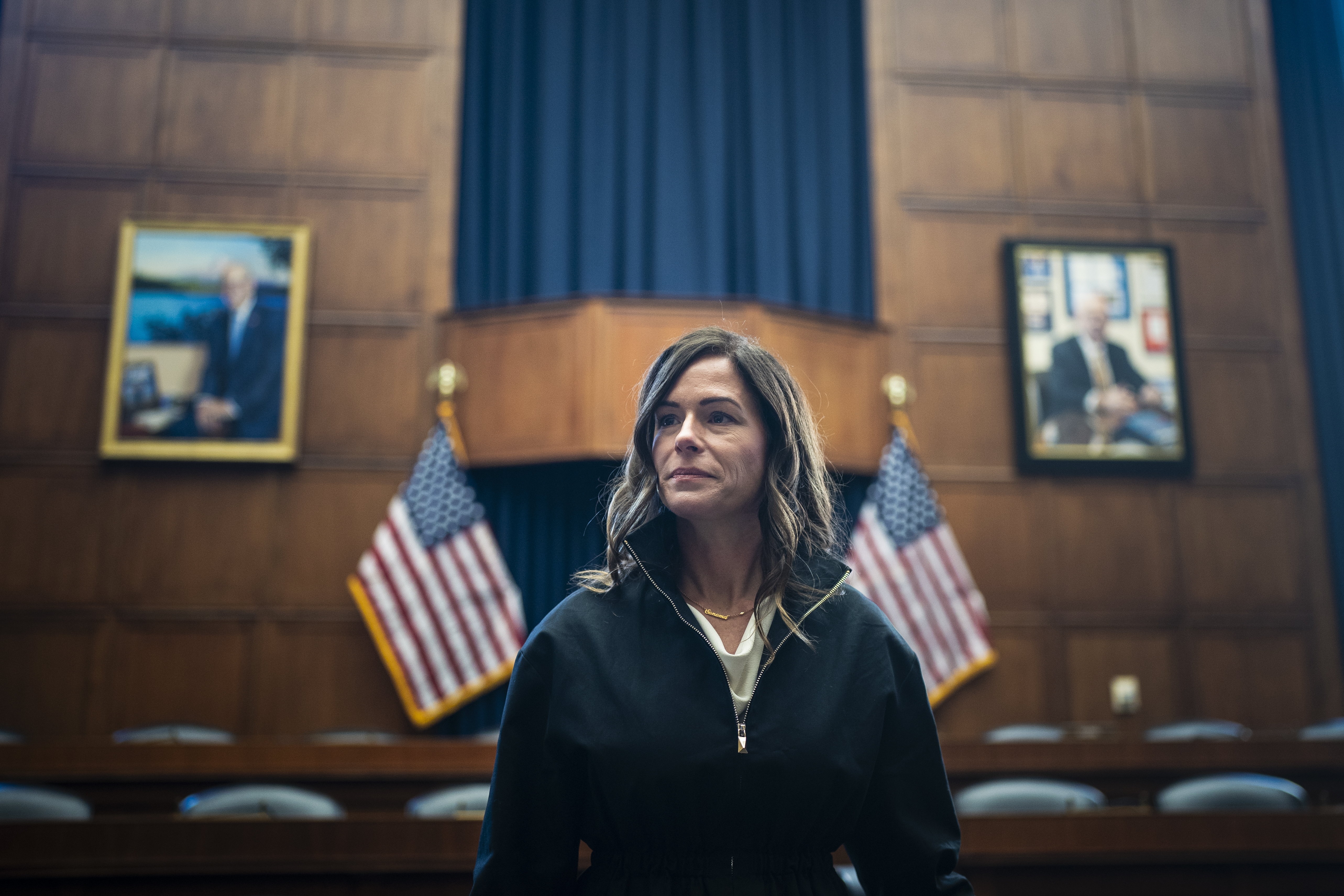
Helping lead this transformation is Kimberly Powell and her colleagues at the burgeoning NVIDIA health practice.
NVIDIA, as you probably know, is the most valuable company in the world. Its chips power the data centers that train and run artificial intelligence. Which, also as you've probably read, is projected to be the most transformative technology in history.
But how exactly did a chip company find itself running a healthcare practice? That was our first question during a recent wide-ranging conversation we had with Powell on Capitol Hill in Washington, DC.
"What we started to build two decades ago is a new computing platform called accelerated computing, originally as a way to simulate the virtual world in the most immersive gaming experiences," Powell told us.
"What we ended up building was this amazing parallel processing capability, and the key thing is you can program it to do a lot of very hard, interesting, domain-specific math."
Early on, researchers at top hospitals realized the potential this parallel processing had to solve a pressing medical challenge they were grappling with.
Back then, CT scans exposed patients to large amounts of radiation. Radiologists wanted to reduce that radiation by 80 percent or more, but doing so produced a blurry image that was exceedingly difficult to read.
Cleaning up that image normally required a massive, room-sized computer. Using NVIDIA's technology, however, researchers found that they could do the same job from a machine no bigger than the size of your desktop PC.
In shrinking that computation down, NVIDIA helped bring advanced image processing directly into other clinical imaging devices such as ultrasounds and MRI's, which ultimately enhanced and expanded the capabilities of those devices, as well.
Around the same period in time, researchers at the University of Toronto had built something called AlexNet, which was a landmark AI "neural network" (which is a computer that uses pattern recognition to solve problems, similar to how the human brain does) and ran it on NVIDIA's hardware.
"This neural network used the same mathematical approach that we use for iterative reconstruction, and what we realized over time is that we had created the accelerated computing paradigm," Powell said.
"And because of that, AI discovered our platform."
In saying, "AI discovered our platform," Powell means that AlexNet, and by extension, NVIDIA's early healthcare work, kicked off the modern AI era that we know today.
* * *
Powell, whose official title is Vice President for Healthcare, has taken those early revelations and built a business line over the past 18 years that works with both the largest healthcare systems in the world and also supports thousands of new entrants into the field.
For example, NVIDIA is providing the chips and computing platform for drugmaker Eli Lilly to build its own AI factory for drug discovery, as opposed to using an off-the-shelf platform like Claude or ChatGPT.
It's working with GE Healthcare to build autonomous imaging systems.
And it's funding new companies like OpenEvidence that provide a ChatGPT-like experience specifically designed for physicians.
What started as a company initiating an imaging breakthrough is now taking on the full stack of a patient's healthcare journey.
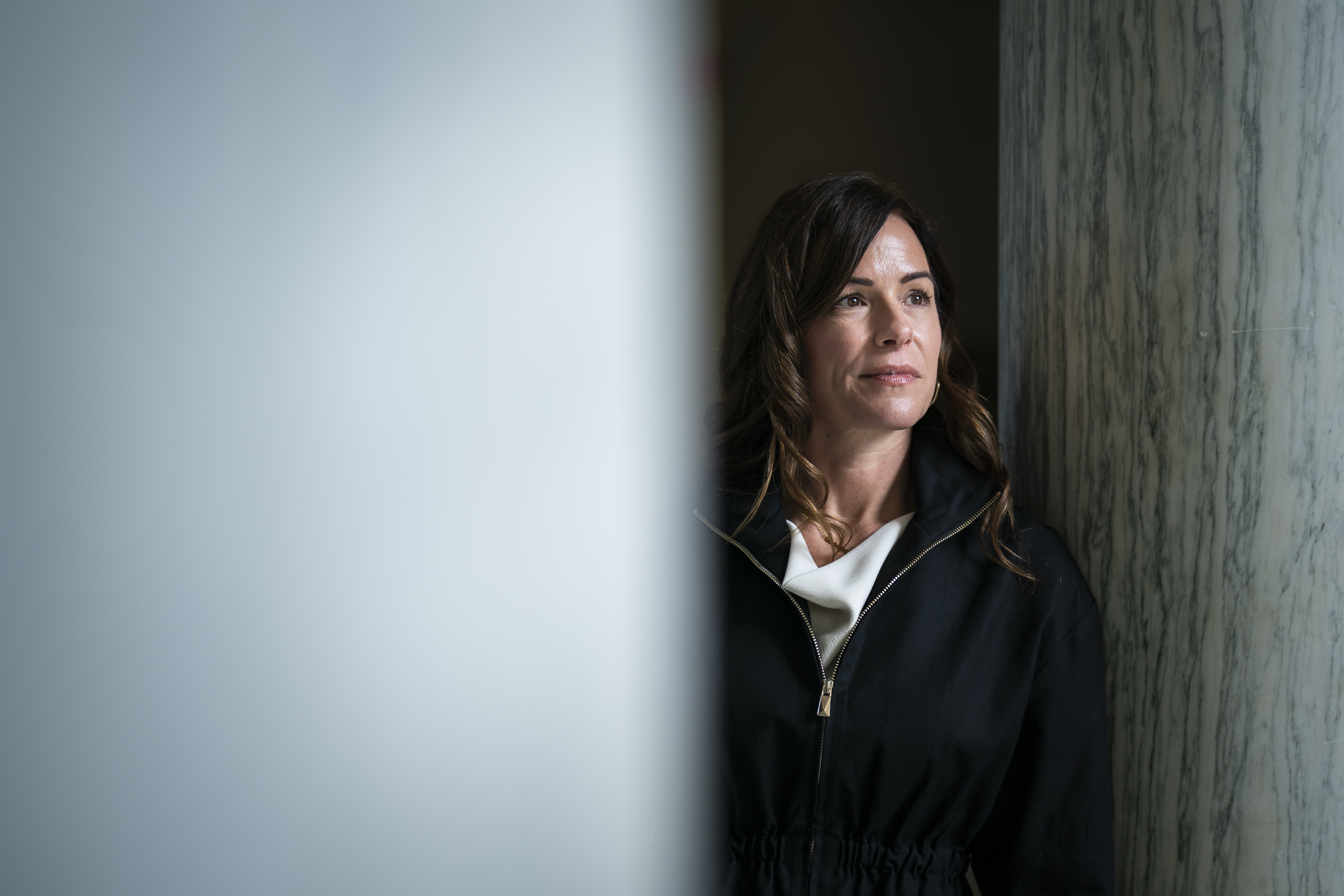
Powell, who graduated from Northeastern University in Boston, Massachusetts with a degree in electrical engineering, started her career working for an imaging startup that helped radiologists at Massachusetts General Hospital turn scans from two-dimensional images into full digital renderings.
When a radiologist told her the new digital imaging allowed them to detect breast cancer that otherwise would have gone unnoticed, she knew this would become her life's work — a pursuit that is undeniably bearing fruit with each passing day.
A recent survey of individuals working in the healthcare industry found that 70 percent of healthcare and life sciences organizations are now using artificial intelligence.
And behind much of that adoption, quietly, just as its business operates, is NVIDIA.
For most of us, the AI we interact with is general-purpose in nature. We query an AI model that then recalls what it has been trained on from the public domain: from common home appliance malfunctions to grammar and spelling checks.
But when AI is used in an industrial or medical setting, the training needs to be much more curated and specific.
And this customization is where NVIDIA has flourished, building chips that are specifically optimized for the type of work that will be performed on them.
If we think of AI as a driver of a car, for example, then chips are the engine. And in much the same way that different vehicles and different types of terrain call for different engine specifications, highly-specialized AI systems run better when the chips and systems are designed for their needs.
Nowhere is this more true than in medicine, where models might be asked to study thousands of medical journals every single day across fields where new and complex information is constantly being discovered.
Suffice to say, it would be impossible for any one doctor to stay on top of the latest research. But with tools like OpenEvidence, that may not be the case for much longer.
Powell told us that OpenEvidence has been "curating the most pristine medical knowledge available, building retrieval and reasoning systems to allow doctors to query it in their own language."
"Being able to take a query from a doctor, reason through it appropriately, route it to the right medical knowledge, and synthesize it back for the medical professional — that is very domain-specific work," she explained.
"Imagine the day when something is unfortunately life-threatening or rare — being able to immediately surface the clinical trial that a patient might be eligible to enroll in, when every second counts."
Alternatively, consider Pittsburgh-based AI company Abridge,, which was founded by a practicing cardiologist. Its ambient AI listens to the conversation between doctor and patient and then compiles what was said into structured, clinically useful notes in real time.
Recalling the engine analogy, OpenEvidence needs an engine optimized for retrieval and reasoning across a vast medical knowledge base whereas Abridge needs an engine optimized for real-time speech processing and clinical language understanding. NVIDIA builds them to do both.
In doing so, technology is restoring the connective tissue between doctors and patients, resolving the feeling we've all likely experienced at times when we aren't so sure our physician is as focused on us or our loved ones as we think they are capable of.
Most doctors want to operate, as Powell says, "at the top of the license." Meaning, they want to do the work.
But one of the reasons they might not seem as attentive is because their focus is often drawn to the required administrative tasks of the job: clinical notes, data entry for electronic health records, post-visit instructions, follow-up communication, or getting insurance approvals before a drug can be prescribed and administered.
When this time-consuming work is inevitably interrupted to see the next patient, doctors often have to complete it late into the night after hours.
So if you ever feel like your doctor is tired. It's probably because they are.
In contrast, specially designed tools that give physicians time back to focus more on each patient can help solve that problem and leave the patient more confident in the care they are receiving.
Listen to NVIDIA CEO Jensen Huang and he will be the first to tell you that as promising as AI's knowledge and productivity benefits might be, the advances that AI can help unlock in our physical world are equally, if not more, consequential.
Sure, we know about autonomous cars. But have you considered what an autonomous X-Ray machine could mean?
For Powell, this is where the work gets personal again, back to where her career started in imaging, spurred by one chance experience with a radiologist.
Only now, the opportunity is not merely that of providing a clearer image to a single patient, but of scaling the capabilities of diagnostic imaging to the two-thirds of the world's population that currently lack access to this critical life-saving technology.
In collaboration with GE HealthCare, Powell and her team are working to build a future where imaging centers can be operated anywhere, just like the blood pressure machines that captured our interests as kids when we waited for our parents to fill a prescription.
You are greeted by a digital nurse with a natural voice that walks you through the process and gives you step by step instructions to get the best picture from an autonomous imaging system as possible. If it's not quite right, it will advise you on any adjustments needed for a better look.
Once the image satisfies the AI assistant, it gets shipped to a doctor who calls you to walk through the results.
For the tens of millions of Americans living in rural areas, this could be a true game changer.
Matching this expansion of diagnostic imaging demands an equal investment to better treat the diseases they uncover.
Currently, the design and testing of potential life-saving drugs is constricted by our natural environment. Cells need time to grow, divide, and respond to treatments.
But the aforementioned Eli Lilly AI factory upends the current model, shifting from 90 percent lab-dependent work and 10 percent compute utilization to 90 percent compute utilization. This enables our best and brightest researchers to focus their time and effort only on the final hurdles of the most promising drug treatment options, rather than the laborious process of trial-and-error that is currently required.
Early indications suggest that what used to take five years in early drug discovery could take as little as 18 months under this new paradigm. And what used to cost $500 million in early discovery could cost as little as $10 million.
"We need that infrastructure inside every academic medical center, every university, every NIH institute," Powell told us. "As a nation, we need to be leaning into this with everything we have — because this moment is too critical to approach any other way."
* * *
It's no secret that a growing segment of the population is skeptical of AI. Polling consistently shows that many Americans do not yet view the potential benefits of this technology as outweighing the potential drawbacks.
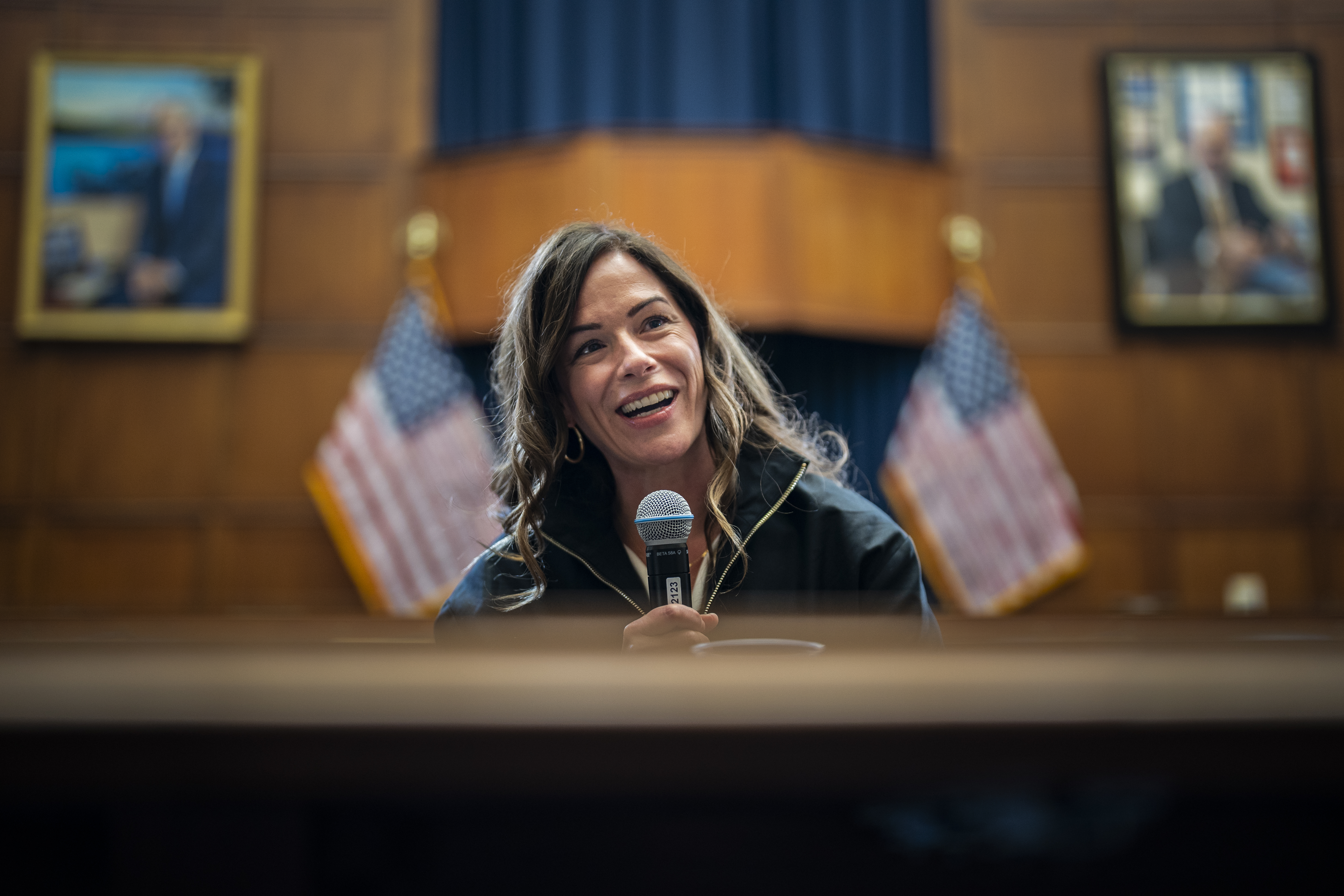
Yet as Powell sat in the ornate and historic House Energy and Commerce committee hearing room this past February, she spoke with a voice and a purpose that has been noticeably absent from our national tech discourse.

In a word, her remarks to the assembled group of congressional health aides were centered on humanity rather than hyperbole.
Not rooted in abstractions or false hope, but tied to real life use cases that are happening around us every day and can affect us all.
And of course, intended to educate and inform, rather than to merely drive "shareholder value."
Machines will never be able to replicate what makes us human — nor should they. But the future Powell spoke of envisioned a world where both technology and humans are operating at our best.
Where AI sits alongside the doctor to help the ailing patient, not one where it replaces the doctor. Where technology is the background music — a powerful tool, but a tool nonetheless that we can turn to when and how we see fit.
For all the talk of complex math and chips and processing power, the lasting image at the end of the day was not one of technology, but of a return to human connection being at the center of the healthcare experience.
Good health is a luxury — perhaps the one thing those of us fortunate enough to enjoy it take for granted the most.
But while a healthy person wants and is afforded many things, a sick person only wants one.
We have never been closer to a world where that luxury is no longer out of reach for so many. And that is certainly a cause we can rally around.