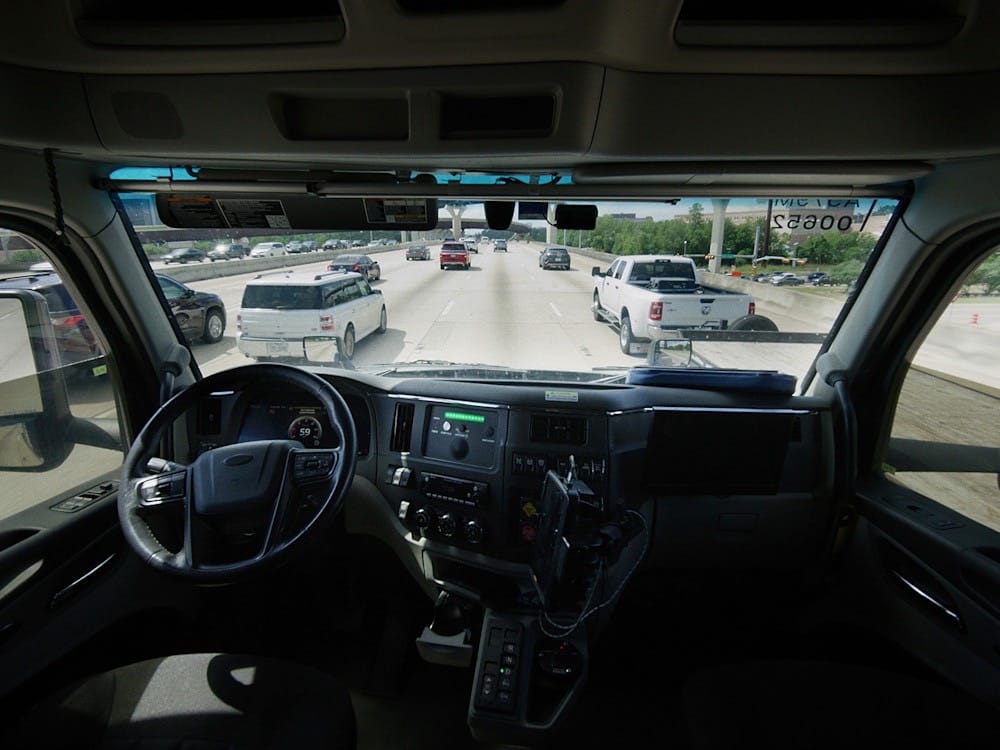
A day before Congress left for the Memorial Day holiday, the House Transportation and Infrastructure Committee held a 14 hour-long markup to pass a bipartisan, five-year authorization of the federal programs that support transportation and infrastructure projects across the country.
Colloquially known as the "highway bill," the 1,000 pages of legislative text also includes something called "The America Drives Act," which creates the first federal regulatory framework for autonomous heavy trucks.
It clarifies that states cannot require a human driver inside an autonomous commercial truck as long as the vehicle meets other federal safety standards. The result would allow autonomous trucks to traverse the country without facing a slew of differing state laws, thus disrupting the physical flow of commerce.
The America Drives Act's inclusion in the highway bill represents a landmark achievement for an industry that has faced a constant barrage from various state legislatures seeking to establish their own rules that would dictate how autonomous trucks must operate within state lines. Should the highway bill become law, its impact will likely accelerate the testing and deployment of robot trucks on the roads.
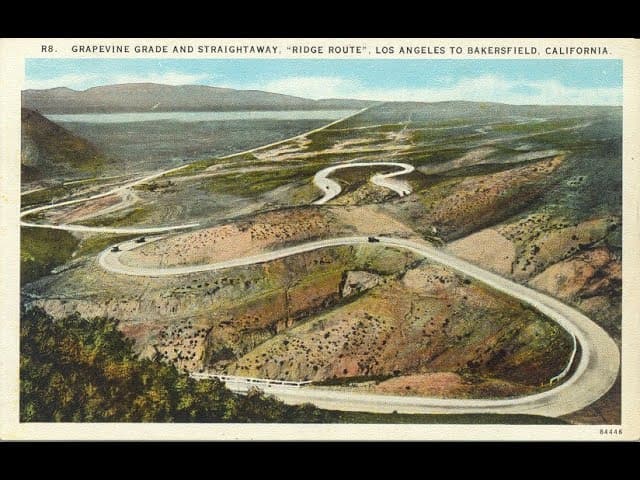
To understand why that matters, consider the drive north from Los Angeles. Starting on the 405 away from the golden beaches of Santa Monica, past the Getty, and eventually merging onto Interstate 5, you'll soon find yourself at the mountainous gateway connecting Southern California to the Central Valley known as Tejon Pass.
At times, the ascent through the pass feels like scaling a wall. Climbing alongside you are massive pipes carrying water from Northern California southward, while caravans of eighteen-wheelers slow to a crawl as they make their way up the grade.
As you continue, the road takes you through a series of steep climbs and sweeping descents known collectively as the Grapevine. And along the drive, it's not uncommon to encounter multiple climates in a single trip: sunshine giving way to rain, snow, or fog with little warning. For the uninitiated, it can be a daunting journey.
One trucker observed that the grapevine "has caused many truck drivers to clench their toes in fear as they headed up the mountain."
The I-5 is the central artery connecting Southern and Northern California, which makes it one of the busiest roads for trucking, with upward of 20,000 passing through each day. This level of density, combined with unpredictable weather conditions and dramatic landscape contributes to a high volume of heavy truck traffic incidents, making it a strong case for autonomy.
A Valley That Feeds America
About 15 miles through the grapevine is the first city in the Central Valley: Bakersfield.
Historically known for its namesake country music sound and countless old-school oil pumpjacks, the question, "have you been to Bakersfield" is often met with the response, "I've driven through it." Amongst those commuters are the same tens of thousands of trucks per day that have just crossed Tejon Pass.
But unlike the passenger vehicles, many trucks aren't just passing through. Plenty find themselves exiting off to the large carrot, orange, almond, and onion farms that support the Central Valley's position as America's largest producer of fruits, vegetables, and nuts.
Trucking's contribution to the Central Valley is indispensable, which explains why some of the more significant federal trucking proposals have come from lawmakers in the valley, past and present.
"When you look at the Central Valley, we are a logistics and supply chain hub." Congressman Vince Fong who authored the America Drives Act told us in a recent interview. "We need to get our products out to the country and to the ports," Fong told us.
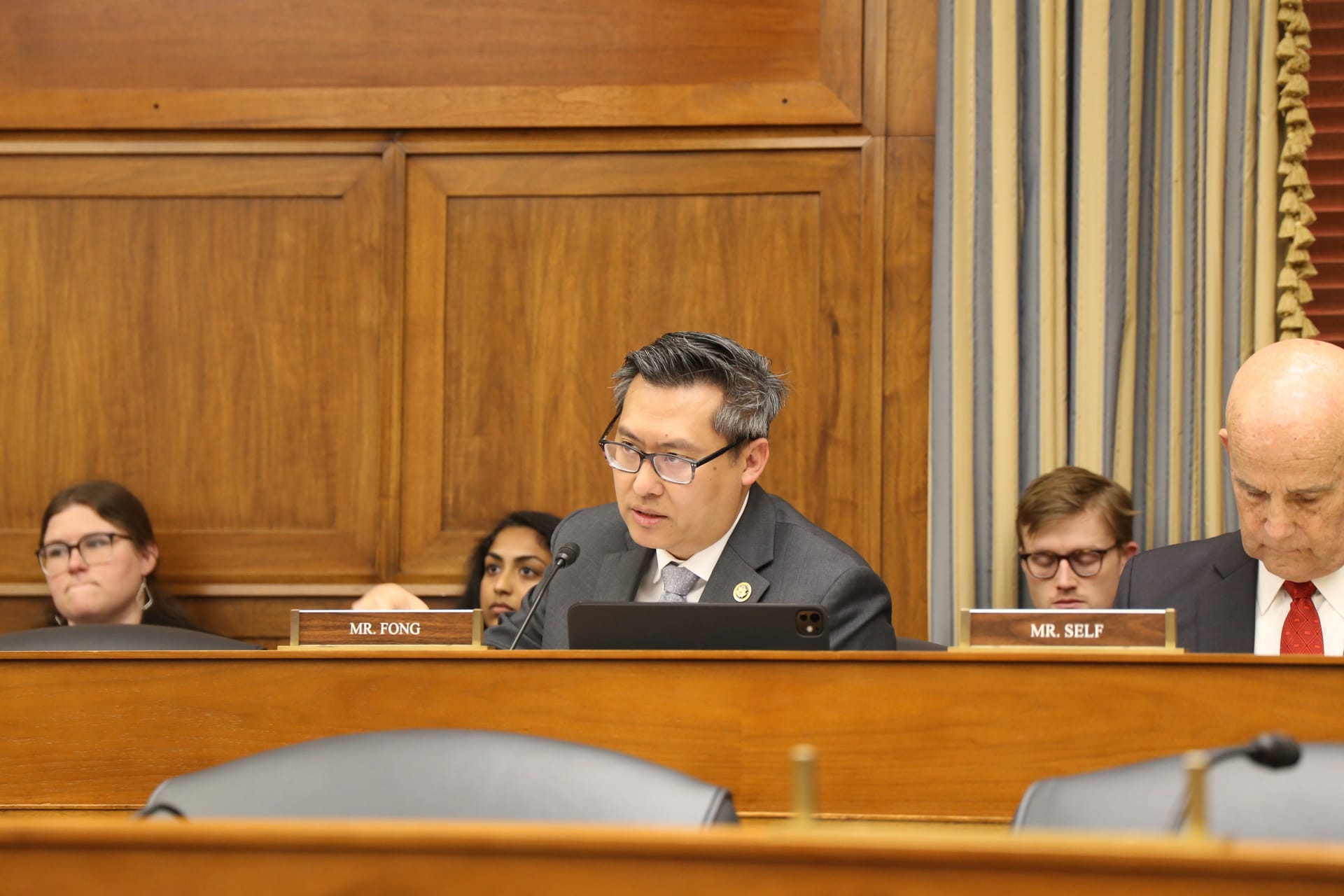
One of the things holding that back is the shortage of truck drivers, with estimates from 2023 at about 80,000 and projections that it could double in a few years.
"These choke points that exist, technology and autonomous trucking are part of the solution" says Fong.
But Fong, a former four-term member of the California state legislature, knows the obvious answer isn't always the easiest.
"California should be leading the way but it's not because it is constantly throwing up obstacles", Fong said.
The World's Most Famous Beer Run
Trucking hasn't always been synonymous with tech. That changed though in 2016 with the first commercial demonstration of an autonomous truck by a company called Otto. The company (which was acquired by Uber about two months earlier for $680 million) outfitted an Anheuser-Busch tractor-trailer and facilitated a beer run from Fort Collins to Colorado Springs without a human at the wheel.
The successful test run ignited a national conversation about what looked like a fast-arriving future that would fundamentally change an iconic American industry.
Advocates pointed towards safer roads, including dramatically reducing the nearly 4,000 fatal crashes involving heavy trucks in 2016. Opponents, though, expressed concern over the displacement of the 2 million heavy truck operators.
It's the type of societal debate that still carries through today across various technological advances (and has been supercharged with the arrival of artificial intelligence). But as policymakers like Fong argue, this national dialogue shouldn't mean the disassembly of progress.
In the state legislature, Fong regularly pushed back against efforts to put up roadblocks on technological development, including around autonomous trucking.
Jeff Farrah, the CEO of the autonomous vehicles trade association recalled to us in an interview that, "In the last three-plus years, there have been 51 versions [of restrictive state autonomous trucking rules], and the very first version of this was making its way through the California legislature. [Vince] was one of the brave ones, with his hand up arguing that California should be embracing technological innovation, ultimately opposing the bill."
When the California assembly considered its bill requiring a human driver to be present in an autonomous truck in 2023, Fong was the first no on the board.
California's efforts aren't unique. As Farrah points out, state legislatures all across the country have seen an influx of proposals to tightly regulate autonomous trucking.
In Washington though, the momentum has been moving in the other direction. Back in 2017, the Trump administration issued a formal request for input on how the federal government should consider its regulatory approach for autonomous trucks.
A year later, it issued the most significant finding to modern trucking, saying that federal safety regulations do not necessarily require a human driver to be physically present in a commercial vehicle.
This represented "a seminal interpretation for autonomous trucking in this country" Farrah said. "By doing that under the first Trump administration, it breathed life into this entire industry. And now there are several leading autonomous trucking companies. It's really evidence of how the federal government can do relatively minor things, like issuing these interpretations, and it makes a huge difference."
Like all regulatory actions though, nothing beats law. This makes the America Drives Act such a significant development.
"Putting a lot of these ideas in statute, I think is going to really give a stamp of approval from the federal government that's going to be very helpful for additional growth," Farrah told us.
The Long Haul
Most debates in Washington present the stakes as existential and immediate. The reality exists on a much longer timeline.
Very few states have autonomous trucks operating on the road currently, and autonomous trucking company Aurora predicts that by 2035, 15 percent of the overall trucking market will be autonomous.
Texas today is home to the lion's share of commercial deployments. Aurora has logged over 250,000 miles in the Lone Star state and Kodiak Technologies has trucks operating in the Permian basin.
This helps solidify Texas' position as the testing mecca for tech, but American goods are not produced and consumed in isolation. That's why we built the interstate system to begin with.
While Fong's initiation to this issue stems from his Central Valley
representation and the drive to keep California at the leading edge,
the larger support the bill received recognizes that whether it's the
Tejon Pass or Fancy Gap in Virginia, the trucks that move American
commerce don't stop at state lines, and neither should the rules that
govern them.