An NBC poll released on Sunday found that AI isn't viewed all that favorably by Americans. Set aside the merits of the position. The reality is this is a poll (and just the latest representation of the consistently stubborn position of negative AI sentiment), and polls drive politics. The White House recognizes this and has been working to identify policy responses to ease concerns around the issue, primarily those that relate to energy costs.
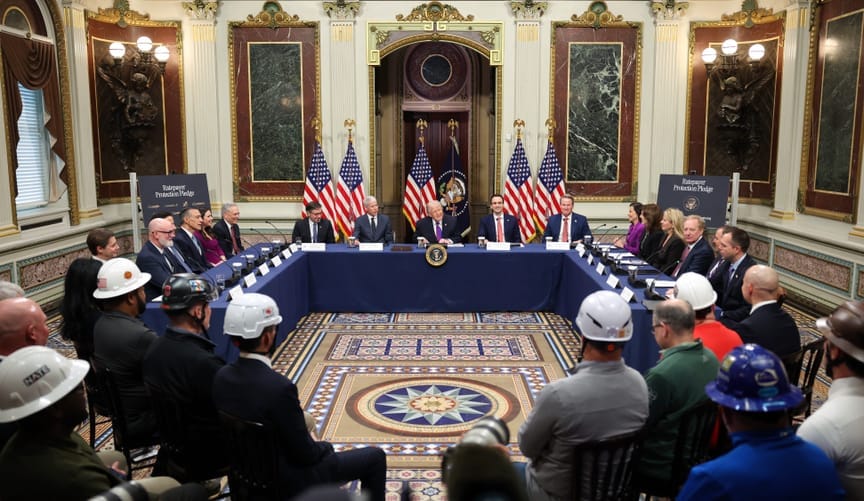
Last week, at an event at the White House which would have normally been a news driver, the Administration announced what it calls, the Ratepayer Protection Pledge to insulate regular electricity customers from the increasing bills due to heavy usage from technology companies.
We sensed it got buried in the news cycle so we thought it would be valuable to resurface it and share what exactly it is about.
Data centers are the factories of the AI age. And like any factory buildout, they need power, land, and community buy-in.
The Trump administration just closed a deal that will drive buy-in.
The Ratepayer Protection Pledge is simple: companies building America's AI infrastructure will foot the bill themselves.
Here are the five commitments made:
- New power supply. Companies build or purchase all generation capacity their facilities need. No offloading costs to existing ratepayers.
- Infrastructure payment. Transmission upgrades, substations, interconnection work. Companies pay for what they require.
- Guaranteed rate payment. Negotiate a rate with the utility and pay it whether you use the power or not. No stranded costs for the public.
- Local workforce investment. Hiring locally, training programs, community roots.
- Grid resilience. Backup power generation will be made available during emergencies. Data centers become grid assets, not just loads.
Energy is soon to be the primary bottleneck on AI development, and is upstream of everything else: manufacturing, compute, talent, and capital. The United States has abundant natural gas, a reviving nuclear industry, and the world's deepest capital markets. The obstacle isn't physics, it's politics.
Ratepayer backlash is one of the most predictable friction points that will derail data center permitting. This aligns companies and the public with local utility commissions, state regulators, elected officials, who are all appropriately responsive to constituents asking if their bills are going to rise in order for tech companies to train and run AI models.
This pledge is the correct use of the bully pulpit to bring parties together. Companies will get their permits. Communities get jobs and protected rates. Grid operators get backup capacity. Everyone has skin in the game.
China doesn't negotiate with ratepayers. The CCP designates AI infrastructure as a strategic priority and builds power generation. No public comment periods. No rate cases. No utility commission hearings.
The Ratepayer Protection Pledge accelerates America towards able competitive speed while maintaining political legitimacy: the buy-in that makes projects durable rather than vulnerable to the next election cycle.
Data centers are going up somewhere. The question is whether they go up in Virginia, Texas, and Ohio or in Malaysia. Every month of delay is ground ceded and capital shifts elsewhere.
The Administration has cleared up obstacles and bottlenecks. Companies pay. Ratepayers are protected. And the grid becomes more resilient.