Several weeks ago, at about 1:30 PM on a sunny Friday, a woman crossing the street on the edge of my neighborhood was struck by an SUV and killed. The vehicle drove away and still hasn't been identified.
Police requests for Ring camera footage from neighbors only produced a blurry screenshot of the suspected vehicle.
Almost immediately after, county police erected a large mobile license plate reader (LPR) on the median of the road where the incident happened.
If only one had been up at the time of the accident. If only one had been up a few weeks earlier when a young family had their home broken into and burglarized while they slept.
"If only" are the last two words you want to hear if you or someone you know and love has been a victim of crime.
Yet, there's a growing movement that is perfectly OK leaving its fellow citizens in that paralyzing state.
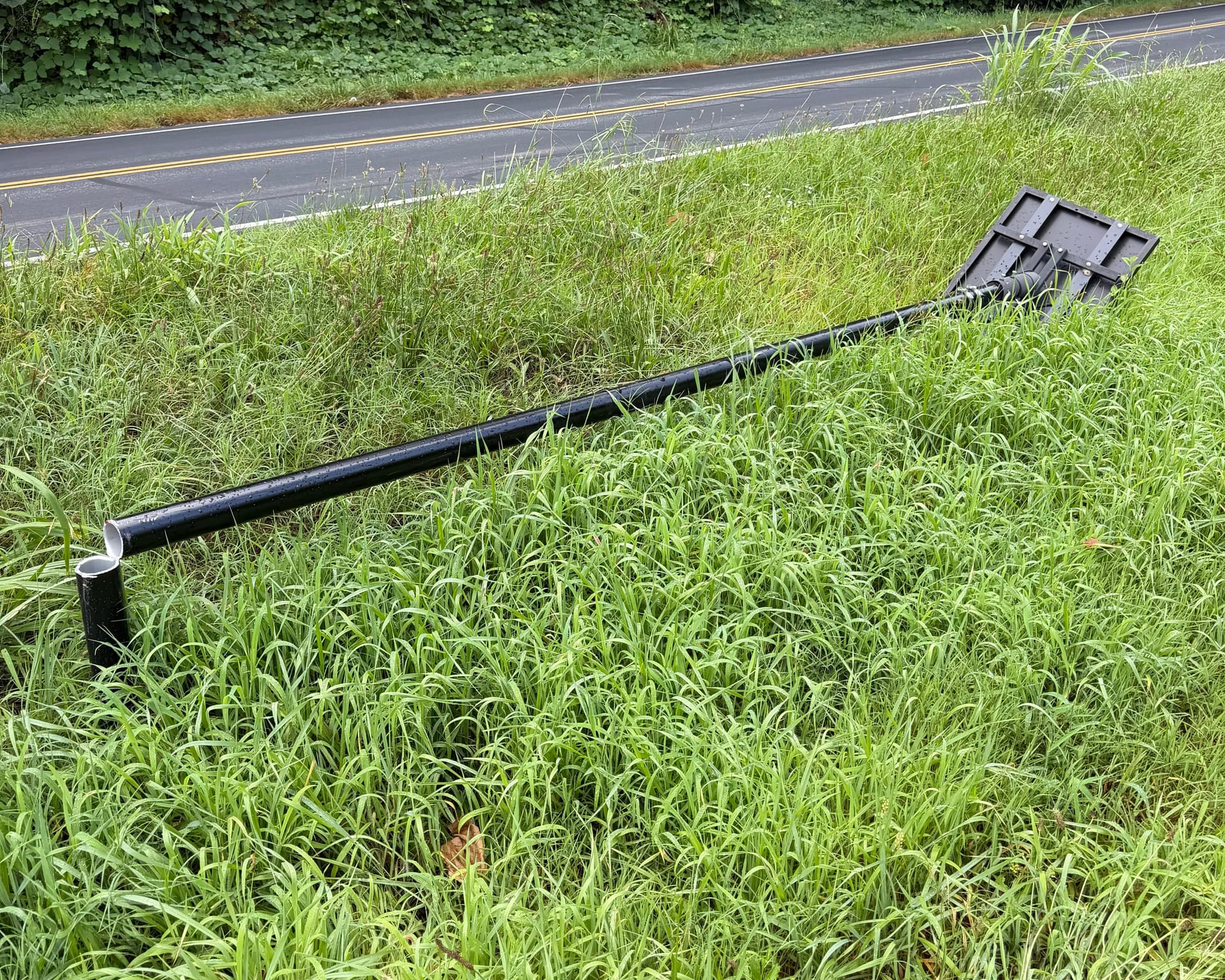
I recently saw a video from someone sarcastically telling people not to buy a laser pointer and not to direct it towards the camera lens of LPRs operated by technology company Flock Safety. Obviously, he was encouraging people to do so.
I didn't think much of it at the time. Then I saw another post a few days later indicating that this type of commentary is actually quite common. I looked it up and yes, it's all over the place. Plenty of anonymous accounts are promoting vandalism against Flock cameras.
Community Pushback
Community pushback from the installation of Flock Safety cameras has been growing and has been covered in the media quite a bit. The Wall Street Journal recently published a story about blowback in communities across the country:
"Clashes are erupting nationwide as communities wrestle with privacy rights and the rapid spread of AI-enabled cameras. Often affixed inconspicuously to poles, they photograph the back of every passing vehicle and collect license plate data—as well as color, make, model and features like a bumper sticker or a gun rack.
About 50 cities and counties have canceled Flock contracts or deactivated cameras since early last year. The list includes liberal college towns like Cambridge, Mass. Conservatives also oppose government collection of personal data. Right-leaning Lockhart, Texas, and Warrenton, Va., rejected proposals to enter into contracts with Flock."
Flock Safety isn't the first company to deploy license plate readers on streets. But the rapid scaling and success in communities across the country has made it the face of a supposed mass surveillance state, a labeling that fails the eye test when you consider the constant surveillance happening on our phones by private companies every time we open them up.
So, why then is a company like Flock currently in the barrel?
Two theories:
First, during the height of the Trump administration's mass deportation efforts, claims were made that Immigration and Customs Enforcement (ICE) officers were using Flock cameras to assist in their efforts. (Flock does not partner or work with ICE.)
The second ties back to the "defund the police" movement that was popular with a vocal minority, yet incredibly unpopular with the vast majority of voters. So if activists can't defund the police, their next attempt is to defund the tools they use to fight crime.
And LPRs are an incredibly effective tool for law enforcement.
Crime Stoppers
By Flock's count, 10,000 missing people were found last year, and the cameras supported over 1 million cases during the same time period.
Search for yourself and you will see, on what seems to be a daily basis, cases such as missing children are solved with the help of Flock cameras.
Despite the fanatical focus of anti-Flock activists, there are still many communities that understand the criticality of the technology.
Northern California's Alameda County, which sits just east of San Francisco, for example, just approved a Flock contract by a 3-2 margin. Overall, more communities are entering into contracts than not.
But this imbalance isn't always represented in our media. And that means more and more attention will be paid to LPRs and the companies that build them. To that we say, good. Because despite sensational claims around surveillance, what is provable is that LPRs solve crimes and save lives. Without them, communities are left with sorrow and unanswered questions. Believe me, I know.