For months, Washington insiders debated how the State Department would handle international assistance after the Trump administration eliminated USAID. Recent developments offer insights into a potentially transformative approach.
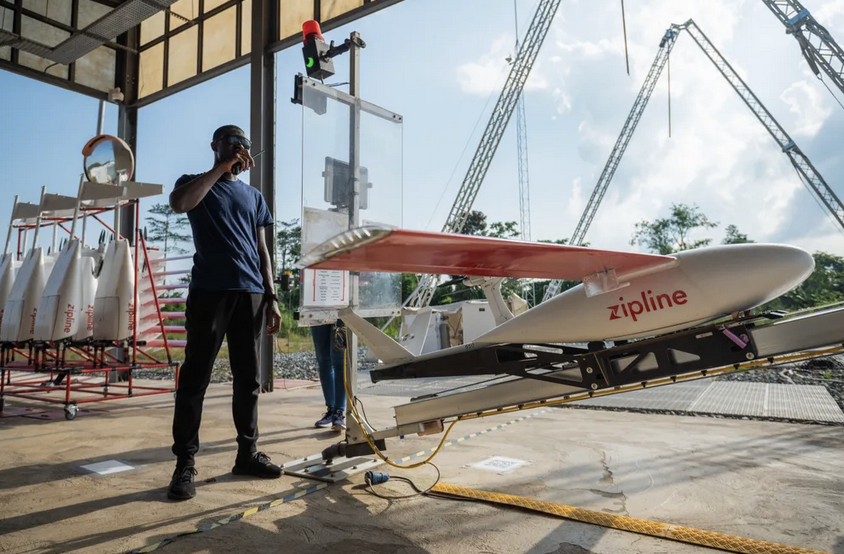
On November 25, 2025, the State Department unveiled an unprecedented arrangement providing up to $150 million to Zipline, a San Francisco robotics firm specializing in autonomous drones. The company intends to broaden its medical delivery infrastructure — encompassing blood and pharmaceutical distribution — across Rwanda, Côte d'Ivoire, Ghana, Kenya, and Nigeria. This arrangement incorporates performance-based funding and collaborative financing from recipient nations, fostering mutual economic advantages. Should Zipline successfully expand operations to serve 15,000 health facilities, total compensation could reach $400 million.
The Core Innovation: Commercial-First Foreign Aid
This represents a fundamental departure from traditional approaches. Rather than bureaucratic design followed by competitive bidding, the State Department directly finances American enterprises to simultaneously strengthen developing economies and advance U.S. security interests.
The Zipline agreement marks merely the initial phase in reconstructing systems to replace the 83% of USAID programs eliminated through recent reforms. Emerging technology companies will become central to implementing foreign aid aligned with American diplomatic objectives.
Background: Administrative Changes
January 20 brought an executive order imposing a foreign aid moratorium and comprehensive program review. By March, Secretary of State Marco Rubio disclosed cancellation of 5,200 USAID contracts — 83% of programming — with remaining initiatives transferring to State Department oversight.
July witnessed substantial departmental restructuring: 132 bureaus and offices closed; approximately 3,100 personnel either departed or accepted severance. Similar reductions rippled through foreign policy agencies government-wide.
Strategic Rationale
USAID, established by President Kennedy during Cold War competition, historically addressed vulnerable populations' fundamental needs while countering broader security threats and strengthening international partnerships.
Contemporary developing nations increasingly prioritize trade opportunities and job creation rather than traditional assistance. Nigeria exemplifies this shift — projected to become the world's third-most populous nation by 2050 while developing significant technology entrepreneurs despite ranking low in human development metrics.
Zipline's Rwandan operations since 2016 demonstrated measurable impact: emergency blood deliveries averaging 41 minutes — one-quarter traditional vehicle times — saving lives across rural regions while reducing medical waste.
Pragmatic Implementation with Safeguards
Commercial-first approaches address documented USAID concerns regarding waste and misalignment with American interests. However, meaningful distinctions require acknowledgment: traditional USAID programs encompassed comprehensive auditing systems and governance training absent from purely commercial models.
Critically, commercial partnerships cannot substitute for humanitarian assistance during crises — feeding starving populations generates no profit incentive.
Defense Department Precedent
The Department of Defense previously shifted from requirement-based acquisition toward commercial partnerships. Legacy approaches emphasized expensive prototypes under "cost-plus" contracts, yielding schedule overruns and technological lag. Companies like Anduril identified unaddressed problems, developed economical solutions, and successfully marketed plug-and-play systems.
DoD formalized this transition through its Acquisitions Transformation Strategy, emphasizing speed, execution capability, and specific technology prioritization areas.
Forward Strategy
This moment presents opportunity for the State Department to establish diplomatic technology frameworks mirroring defense sector reforms. Federal restructuring displaced experienced personnel into private markets while technological advancement reduced startup costs. Partner nations possessing emerging technology sectors and expanding populations seek collaboration with American enterprises.
The State Department should articulate broad diplomatic engagement goals attracting traditional partners and innovative entrepreneurs. Such frameworks would identify critical technology areas warranting diplomatic innovation investment. Congress might subsequently apply commercial-first approaches to State Foreign Operations appropriations, paralleling National Defense Authorization Act reforms.
Conclusion
Properly managed commercial-first approaches can establish mutually advantageous development assistance benefiting millions while strengthening allied nations, protecting American interests, and catalyzing domestic innovation.