Joliet is no stranger to the friction of large-scale development. From the collapse of the Illiana Expressway to the ongoing expansion of the regional logistics network, the city has often been the staging ground for a singular conflict: the promise of regional economic growth versus the reality of local impact.
Failure to build consensus by, for example, maintaining a pace of decision-making that moves faster than the pace of public alignment, has sunk past development efforts.
The fate of these types of projects is not based on whether disagreement exists, but how it is handled.
This history matters because it frames what just happened in Illinois' fourth largest city and a proposal to build a data center the size of Central Park.
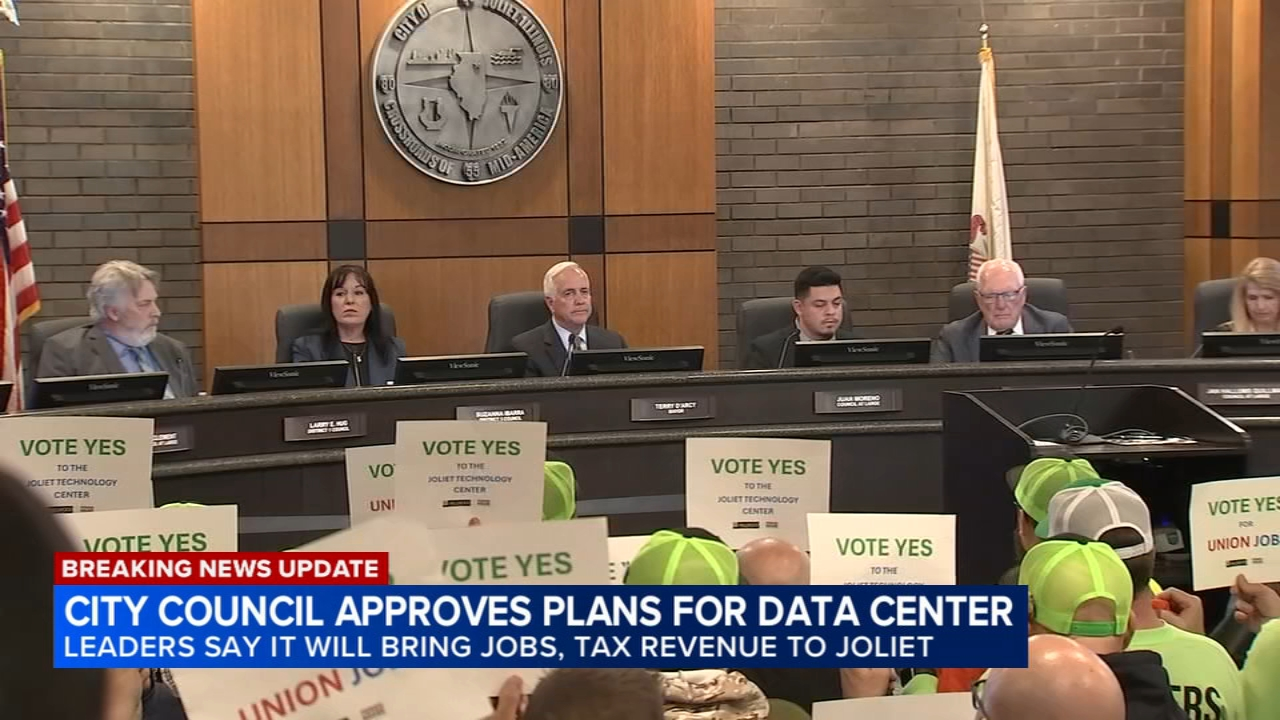
Last week's 8 to 1 vote to approve the 795-acre Joliet Technology Center did not skirt conflict that defined past project proposals. It codified it into a multi-billion dollar annexation agreement that represents one of the most significant municipal trades in the history of the city.
The question is not simply what passed, but also why this one did.
A Perspective Rooted in Experience
During my time as a state representative, I opposed the Illiana Expressway based on concerns over the use of eminent domain and the impact it would have on property owners in the region. The prospect of taking private property for a project that had not yet earned broad public alignment raised serious questions about both process and priority.
That experience shaped how I, and many others in the community, view large-scale development efforts.
An outsider might observe the lopsided margin as an indicator that there was little public concern over the new Technology Center, or that the public was simply clamoring for a new data center. But the reality played out in a marathon, seven-hour public hearing where hundreds of residents voiced concerns about water usage, energy demand, noise, and long-term quality of life. Environmental advocates added pressure around resource consumption and infrastructure footprint. The opposition was broad, visible, and sustained.
That meeting did not stop the project. But it did help define it. By the time the final vote was taken, the points of conflict had already surfaced, been absorbed, and translated into the structure of the agreement. The process did not avoid tension. It required it.
This approach stands in contrast to what has occurred in other regions where similar projects were pushed forward on accelerated timelines. In those cases, decisions moved faster than public understanding, and the result was not just project failure but political backlash.
When leadership attempts to outrun public concern, the outcome is often resistance that hardens rather than softens. Joliet Mayor Terry D'Arcy and members of the city council avoided that collapse by allowing the tension to occupy the center of the process before the vote was taken.
The structure of the agreement took shape in public view and accommodated several concerns, including water usage capped at 150,000 gallons per day and noise limits set at 65 decibels with generators housed indoors.
And of course, infrastructure and community investment commitments strengthened the appeal.
Financial Architecture
Project developers Hillwood and PowerHouse pledged $100 million in direct community investment, including $20 million upfront with the remainder tied to construction milestones. When paired with projected tax revenues of $310 million over 30 years and more than $600 million for local schools, the project presented the council with a significant capital infusion.
Organized labor reinforced that case with unprecedented visibility. Representatives from the Will-Grundy Building Trades Council and the Three Rivers Construction Alliance argued that the scale of this project had not been seen in the region since the construction of the Braidwood Nuclear Station. For them, the 7,000 to 10,000 construction jobs are not just a number on a spreadsheet. They represent a reversal of a trend where local tradespeople like Pipefitters 597 and LiUNA have been forced to leave the state to find work. The unions framed the Joliet Technology Center as an anchor for the local middle class, emphasizing that the project requires no tax incentives or tax increment financing (TIF) districts to succeed.
For a city navigating the multi-billion-dollar transition to a Lake Michigan water source, those figures represent more than growth. They represent a shift in long-term fiscal capacity.
The Larger Context
At its core, this decision represents a trade. Joliet is exchanging land, energy demand, and long-term infrastructure impact for immediate construction jobs, future tax revenue, and a position in a rapidly expanding digital economy.
Unlike traditional development projects tied to a single employer, this facility is being built as infrastructure first, with end users to follow. That expands the long-term upside but makes the immediate benefit less tangible. That trade looks different depending on where someone stands.
It's important not to ignore that citizen doubts remain. Councilwoman Suzanna Ibarra's lone no vote highlighted concerns that certain areas continue to absorb the physical footprint of development while the broader city shares the benefit.
The project also remains speculative. No major tenant has been named. Joliet is building infrastructure first and betting that demand will follow. For many residents, the question remains direct: Who is this really for, and when does that benefit become visible locally?
The Conclusion of the Vote, Not the Conversation
The data center facilities you read about so much are not abstract technology hubs. They are the physical backbone of systems people rely on every day. Financial networks, healthcare systems, logistics operations, and the growing demands of artificial intelligence all depend on computing power that must exist somewhere.
Moreover, the demand is global. Some countries are building this infrastructure without an extended public process. The United States operates differently. Projects of this scale move through scrutiny, debate, and local resistance. That inevitably slows development. But it also ensures that local impact is part of the decision. Joliet's vote sits at the intersection of those realities.
By approving the Joliet Technology Center, the city has taken a step beyond its logistics identity and into a data-driven future. That decision represents a calculated exchange.
Whether it proves to be a long-term strategic gain or a localized cost will not be determined by the vote itself. It will be determined over time. The benefits will arrive in phases. The footprint will remain.
The vote is over. The conversation is not. 
John Anthony is a former police officer, state representative, and currently hosts the Black and Right radio show.